capasits (dispatch 9)
An encounter with the public health system, and bureaucracy, and frustration, and care, and kindness.
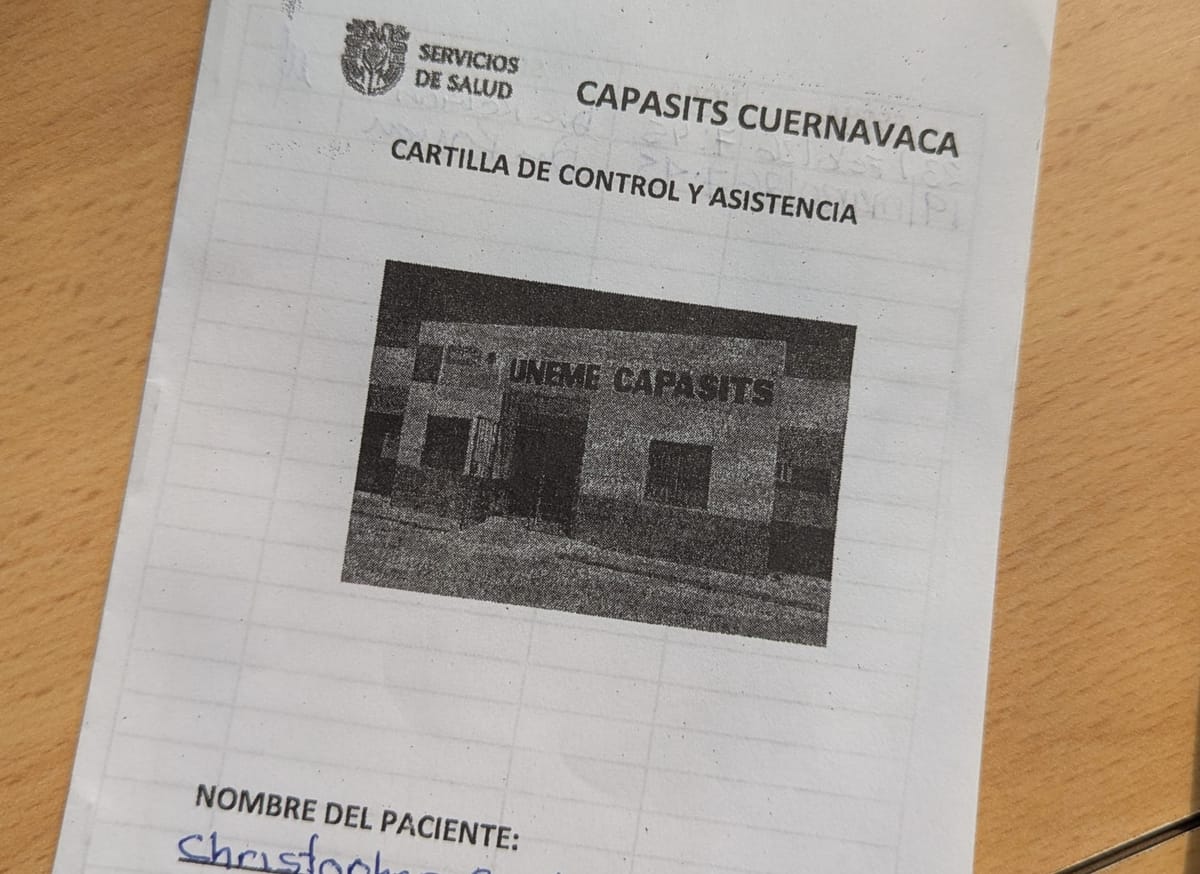
I spent an unreasonable amount of time in my first six weeks here in Mexico trying to track down a prescription for PrEP, which is a prophylactic medication to prevent transmission of HIV. Not 100% necessary, unless it is, I guess, and that's all we need to say about that.
Except, it shouldn’t have been that hard, and I’m looking at you, global medical-industrial complex. Leaving aside the whole question of, you know, saving lives, this medication ought to save piles of money for insurers and health providers; there are reasons not to give it out on street corners, but PrEP ought to be freely and widely available, everywhere. It is not - not in the United States, where my insurer and pharmacy, who by the way are the same evil conglomerate, didn’t believe I should be able to bring an extended supply of the stuff, and not in Mexico, where every effort to obtain it turned out to be a rabbit hole.
All of those rabbit holes led to the same place, a clinic at the local public hospital here in Cuernavaca called Capasits. I was trying to avoid that, partly because the advice from various corners was that they probably wouldn’t help me as an extranjero, but more because I had no desire to place any additional burdens on the public health system, nor to be taking medication that I could almost certainly afford out of the hands of someone who could not. Nevertheless: Every proposal for how to solve this problem kept invoking the name of that same public clinic.
Pause to note, or maybe this is the point. In my six weeks of trying, everyone had a solution that was not what appeared to me to be the simple one: find a doctor and get them to write me a scrip, which I will then pay for. It is possible, even likely, that that was not the simple solution, and that everyone knew it, and they were trying to save me time and heartache. It is also possible they were just trying to save me money, and the weight we placed on that matter was different. But after enough of the aforementioned rabbit holes, I concluded that the idea that going through official channels will never get you what you want predominates here, or at least the result will not vale la pena, and so you have to find a workaround. I know a guy who knows a guy, I would be told.
And, and perhaps this is also the point, everyone was so kind about it. So helpful. Finding PrEP, as I said at the outset, was not a 100% critical endeavor; I wouldn’t be keeling over in a few days without it. I kept telling people this. And yet, people kept making efforts on my behalf, people who had never met me, who had no reason to care. It is just the culture. So I couldn’t ignore those efforts. My friend Martha would say, let me call Alfredo, he knows a guy, and my inner non-cynic would say, we don't need to do that, just, how do I find a doctor? But everyone's desire to help was so strong that the only correct response was gracias.
Eventually, though, all of Cuernavaca’s hilly roads led me to Capasits. The public hospital sits at a jumbled intersection next to Costco. We had stopped there on my first day in Mexico, Three Kings Day, to give the leftover rosca de reyes to families waiting outside the emergency room for their loved ones. The hospital lacks a waiting area, indoors or outdoors. There’s just the sidewalk, and people sit on tarps and cloths and pieces of cardboard, or maybe just on the concrete, among food vendors, waiting, probably all day. And probably anxiously, given the involvement of the ER.
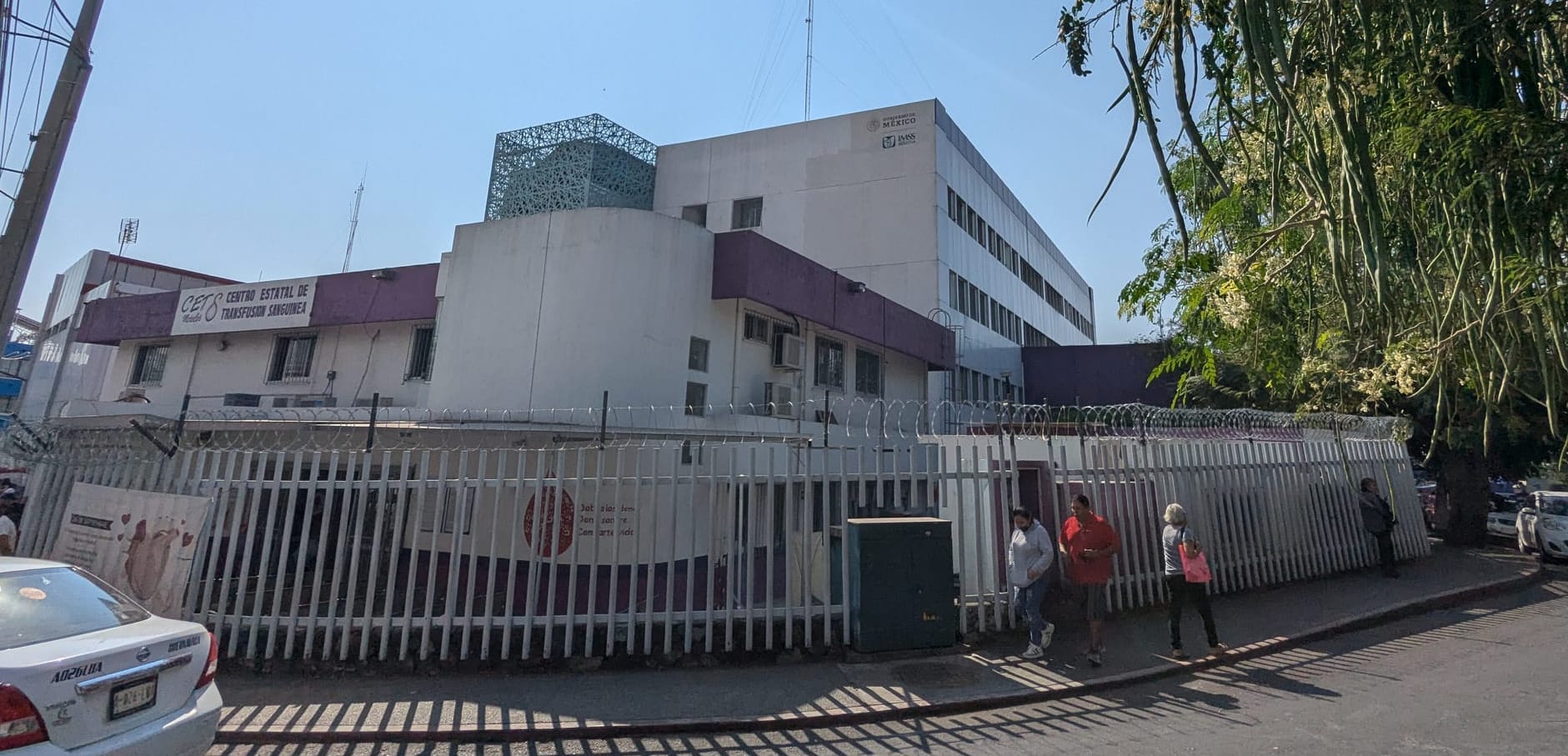
I generally try not to judge Mexican ways of life against US standards, and I have been to more than one US hospital where the waiting room looked unnecessarily like the Ritz. I am going to say, however, not offering people a place to sit while waiting for their loved ones in the emergency room is a failure. (Discuss among yourselves.)
On this second visit to the hospital I went back to the emergency room entrance, because the main entrance was not obvious. I said “Capasits” to the guard, and he shrugged but waved me in. Inside I said “Capasits” again to a woman behind a random window, and she sent me back out to the main entrance, fortunately waving in its general direction. Another gate, another guard, another incantation of the magic word “Capasits.” He admitted me with a point and a smile. The clinic turned out to sit in a separate building in a corner by itself, off to the right and down a few steps, shaded by various kinds of tropical vegetation.
I told a gentleman at a podium I was there to see if I could get PrEP. OK, he said, and sent me back outside to wait in a seating area in the shady nook. A little while later a nurse came out and asked me to follow her into her office. She couldn’t have been kinder. She asked me several basic questions, drew a vial of blood from my left ring finger, sent me back outside for another twenty minutes. Then she called me back in, showed me four negative results and said, “So you’re good!”
“Well, I had come here because I’m hoping to get PrEP?” I mumbled in some version of Spanish.
She looked puzzled for a minute, stepped out of the office, and came back with a pink date book. I expected an appointment in April. She offered Wednesday, two days later. I gave her a muchas muchas gracias, or maybe a muchisimas gracias, or maybe both. She smiled.
Really, I can’t begin to tell you how much, at every turn, I find people being utterly pleased to be able to help. Yes, I’ve spent thirty years living in New York, and have often said the great thing about living in New York is that you can go almost anywhere else and be shocked at how friendly people are. This is another level, though.
On Wednesday I trundle back over the hills to Capasits, this time with an actual appointment. I am expecting to see the same nurse, since she had put the appointment in what appeared to be a personal calendar, but instead I am called in to sit with a thin woman with short-cropped hair and a mask hiding any facial expressions other than her intense stare. I explain what I am there for. I explain that I’m a foreigner on a tourist visa, without a CURP or an INE or any other of the official numbers I might need. (Doing next to anything in Mexico without a CURP or an INE moves you immediately to boss-level bureaucracy.) Moreover, although I have my passport and proof of my local address with me, I do not have copies. This is unquestionably an own goal. The woman performing intake looks stymied by this. I can see three machines that look capable of copying from my seat, but that is not going to be a solution here, and neither do I suggest it as one.
She frowns, best as I can tell, through the mask, and sends me back out to the shaded waiting area.
Other people come and go. Conferences are held, I guess, regarding what to do with this estadounidense who’s going to take up our whole morning. Eventually someone decides they can deal with me. I don't see by whom or how that decision is made; just, after a bit I am again summoned to sit with the administrator. She hands me some forms to fill out, which briefly confuse me, but she tells me exactly what to write as the reason for my visit, and explains that on the single line for name and signature I should print my name on the line and sign my name above that.
She begins asking me questions. Easy ones: age, place of birth, occupation.
Then: religion? I am visibly unprepared for this one. I think for a moment before landing on “Cristiano.” Close enough. It seems like the right answer to give a woman with an image of the Virgin Mary on her computer screen and a pendant with the Virgin Mary around her neck.
What is your job? I’m a writer. Who is this emergency contact? She’s the head of the school where I'm taking Spanish classes. I joke that I obviously need them. She has not yet warmed up enough to this problem child to laugh.
Then: Money. What is your monthly income - in Mexican pesos. I explain that I didn't have a job now, but in the past year I had [takes out phone, does math, comes up with obviously wrong number, tries again]. How much are your monthly expenses? I pull a figure out of the air. How much is your rent? (Easier, I pay it in pesos, but was I supposed to have excluded it from the previous figure?) How much do you spend on gas, electric, water? How much do you spend going out? How much do you spend on groceries? How much do you spend on clothes?
This goes on for a bit. Then she asks me again how much income I have, and I explain, right now, none. This puzzles her. I feel like I am back at the immigration checkpoint, being asked how I'm going to support myself these six months. I explain: I have savings, I have retirement savings, I have - I have no idea what the word for severance package is so I just kind of tell her my job was ended and they paid me some money.
How many times a week do you eat meat? How many times do you eat chicken? (More obviously something I should have excluded.) Fish? Rice? Frijoles? Milk? Bread? Refrescos? Fruit? Tea? Coffee? Vegetables? Chiles? The list is detailed and yet not comprehensive; no queso, no ice cream. She assiduously writes down all the numbers I toss at her.
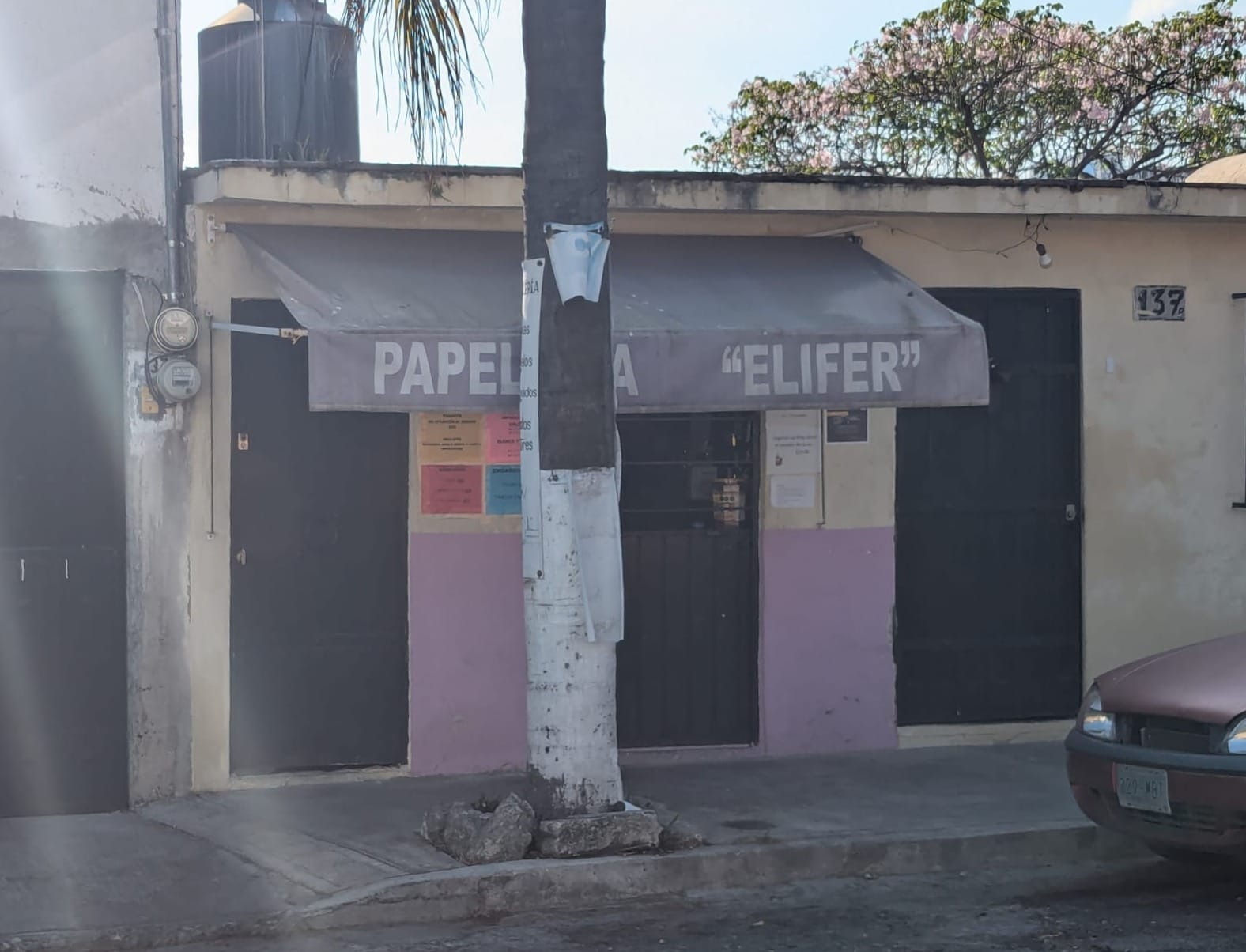
Does your home have a refrigerator? A stove? A blender? A microonda? Finally I get to say no and stop worrying she thinks I’m privileged. It has water, light, gas? It has a concrete floor, right? I say yes because I can’t remember the word for tile. And the walls? And the ceiling? Is there an exterior wall? What color is it? And there’s an exterior door? What color is the door? Dark brown or light brown? What is nearby your home, like is there an OXXO or a papeleria?
You may think I am inventing some of these questions for effect. I can assure you I am not capable of inventing the question, Is there a stationery store near your home?
Do you smoke? (No.) Do you drink? (Yes.) Surprisingly, she does not ask how many drinks a week, which is practically the first question my doctor asks me every time I see him. Are you single or married? Do children live with you? She comes to a bunch of questions that don't apply. For each of them she carefully marks three short dashes in the space.
It is all a bit like my Jeopardy! tryout, where I was trying to answer questions correctly while simultaneously being cheerful and also attempting to be the sort of person Jeopardy! wants as a contestant. Here in this noisy clinic I am trying to understand her through her face covering, and to estimate how many times I eat breakfast cereal in a week (“three”; probably low), and to conjure the word for “separated from my spouse," and to thread every response through the gap between honest and does not disqualify me.
And, because I had many years of working in a bureaucracy, I am thinking: What will happen with these answers? Not from a privacy perspective, I don’t care who knows how much carne I eat. Just: Are they useful in any way? Obviously, someone in Mexico City decided that all new patients in the hospital system should provide information about their health habits. Yet at no point does she interact with the computer on her desk. Perhaps some clerk somewhere will enter these responses in a database later. Perhaps this piece of paper will go into a carpeta with my name on it - she does, in fact, pull out a manila folder and write on the tab - and into a file drawer, and never see the light of day again.
Eventually the questions begin to wind down. I apologize to the administrator, telling her I know that I’m an exception to the process and that it’s the exceptions that end up taking the whole day. Maybe it’s my apology, or more likely it’s just that we’ve been able to complete this process with relatively minimal confusion and frustration, but she warms up a bit. She explains to me that I can take my passport outside, go up to the light and across the street, and there’s a tienda where they can make photocopies. I should do that and return immediately.
When I’m back with the copies, she looks them over and puts them in the folder, and then carefully writes two appointments in a little folded paper appointment book. One is for tomorrow at a different clinic, and one for next Monday back here at Capasits. She hands me the book and says something about “ayunar,” and I don’t know the word so I repeat “ayunar?” and she says “Sí.” I decide I'll look that one up later.
I don’t understand her instructions for how to find the other clinic, so she and another person in the office pull up Google Maps and click their way, ten meters at a time, down the street from the hospital to the clinic. I cannot tell you how helpful people here are determined to be.
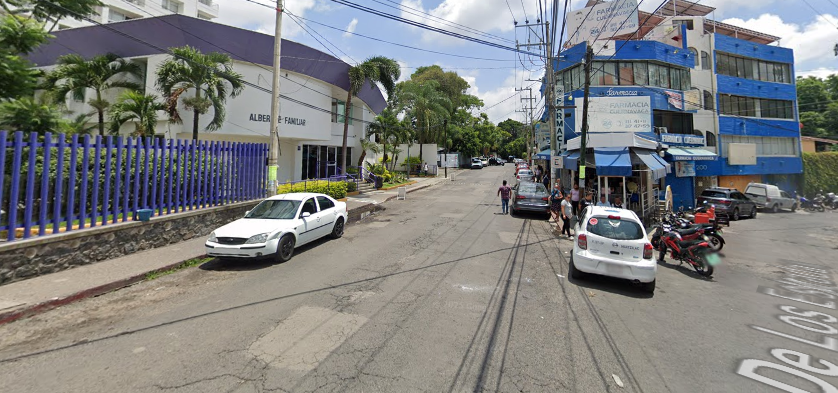
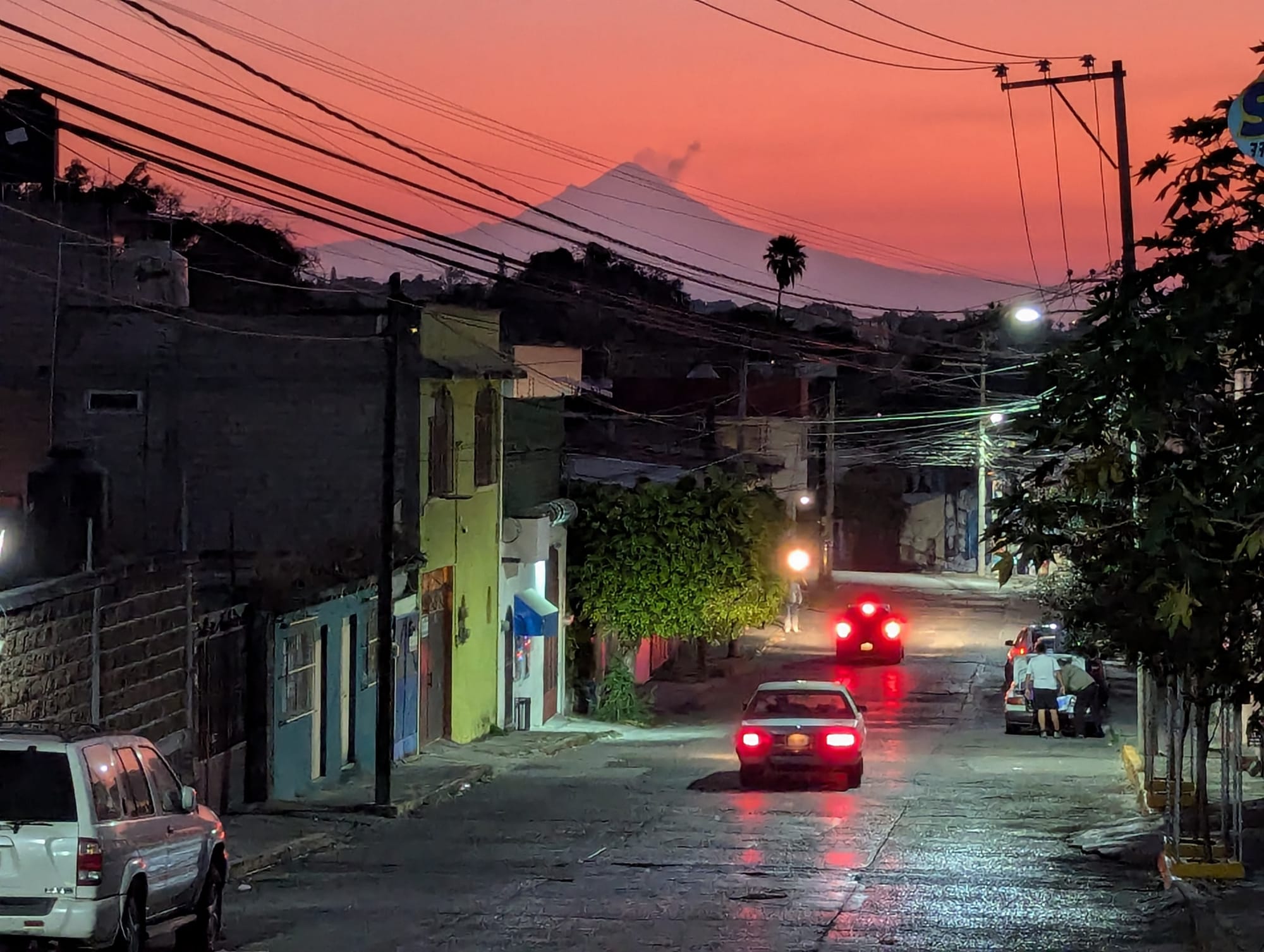
As with many things in life, once you’re past the gatekeeper, you’re in, and the task becomes not to screw it up. Ayunar means fast - the opposite of desayunar, to eat breakfast - and so I drink some water and dress and head out for my appointment at the other clinic. I go early, because some of the people advising me about Capasits informed me that you can get there early or you can wait all day. On the way I get my first good view of Popocatepetl.
The clinic opens at 8 am. I arrive before 7, and I’m about the fifteenth person to sign in this morning. I’m sent to a waiting area where the others are seated. Most of them greet me, buenos dias. Others arrive and I join in greeting them. I hadn’t noticed at first, but there is a community here - folks who come regularly for their blood tests or dialysis or whatever else they may do at this clinic. Each person who arrives after me asks Quien es el ultimo? and sits next to that person, or otherwise plausibly next in line. We sit quietly in the dim morning light, on a sort of covered patio, looking at our phones or dozing. The large majority are men. I consider that if some number are here for HIV-related services, PrEP or otherwise, then likely they are gay men, and I would never have guessed that any of them are gay men. There’s nothing to do with that observation except to make it. A young man comes in and sits down next to an older guy, maybe twenty years his senior, and after a moment they cuddle in the chill of the morning.
At 8 o’clock a nurse greets us, gets us in her version of order, and goes over the rules. One of the rules is to wear a cubrebocas, and I start to panic because I don’t have one. It seems sort of clear they're not going to provide one from a box inside. I’m screwing it up, I think. The guy sitting next to me had left and returned with two masks, one for him and one for the person next to him, and I asked where he got them. There's a farmacia across the street, he says; you can buy one there. You have time. Somehow his encouragement, “you have time,” is meaningful. We're in this together.
Once we get underway, the process, another blood test, is quick and simple. I go out into the world and break my fast at the nearby IHOP, because they have a promotion and I haven’t had a US-style breakfast since getting here. It’s as bad as you think, which is to say exactly like eating in an IHOP in the United States. I leave full of pancakes and regret.
On Monday I go back to Capasits. I have a real appointment now, and they’re mostly ready for me. One nurse takes my vitals, and I appreciate the way she speaks slowly and clearly and loudly as she tells me to stand on the scale, no turn and face the other way, OK you can sit down here again. Finally I see a doctor, and it feels like getting in to see the Wizard, broom in hand. Except she’s not startled and at a loss. She’s quite kind. We talk a moment about what I’m doing there. When I mention I'm writing a book, she asks what about. (Everybody asks that, including the officer back at the immigration checkpoint at the airport. I was suspicious of his questions; surely this was a trick. “It’s a theme that interests me,” he said.)
Doctora Roman introduces herself, as she looks at my charts, both the vitals from the nurse and the information that someone has entered into a database between last Tuesday and today. She asks me my name, and I tell her and she says - that’s not what it says here. I'm momentarily back in don’t-screw-it-up panic, but we quickly sort out that U.S. passports put the apellido in the wrong place. She makes a quick update in her system, and goes on with a series of health questions and explanations about the medication. Then she asks me if I like Mexican food, and I enthusiastically say yes. She smiles and warns me about the challenge of maintaining good vitals in the face of Mexican food.
Finally she writes me a prescription, writes a follow-up appointment for a month later in my little appointment book, and gives me directions to the hospital pharmacy. I head out into the world, 30 pills in hand.
I don’t know what this dispatch is about. It’s about an encounter with the public health system, which may not be especially different in Mexico or the United States or anywhere else in the world. It’s about frustration. It’s about seeing my privilege. It’s about patting myself on the back for managing all this in a new place, in a new language. It’s about the point where capitalism and public services meet. It’s about the places where bureaucracies and actual people meet. It’s about the social contract. It’s about navigating streets and bureaucracies. It’s about navigating streets and bureaucracies in a place where the social contract says we figure out how to navigate them together, somehow; not always, not all of us, but whenever we can, even the people inside the bureaucracies. It’s about kindness, obviously.