carnaval (dispatch 7)
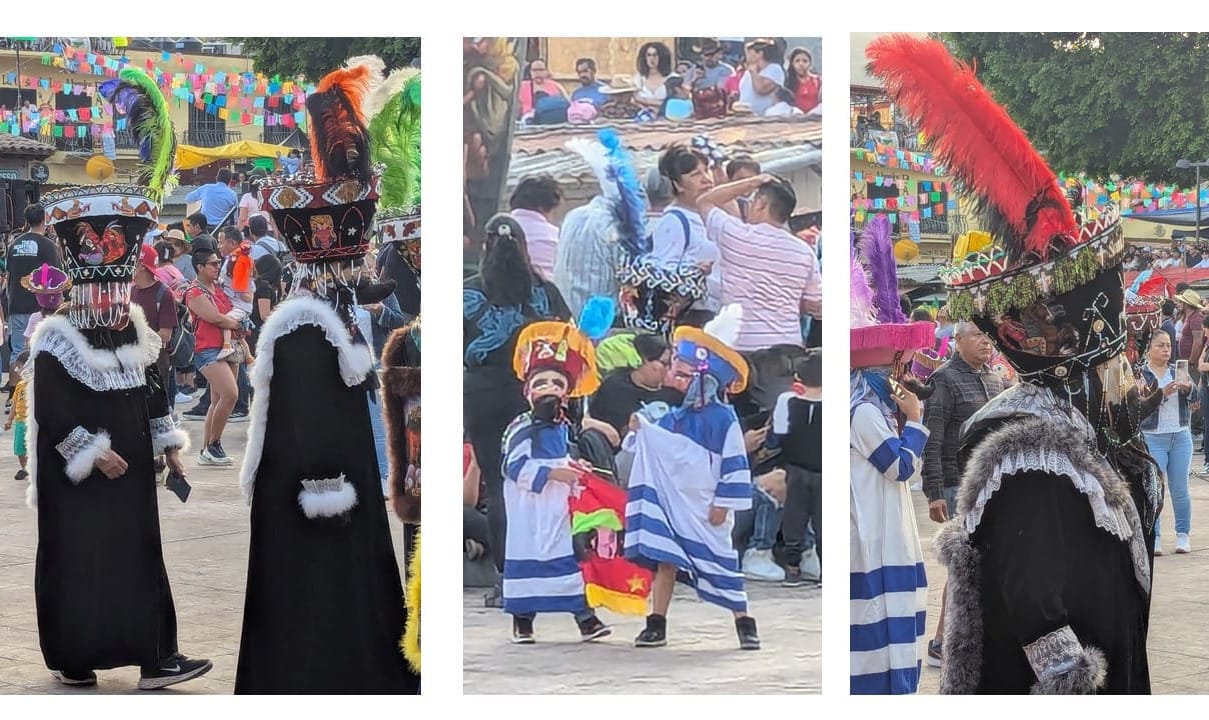
Carnaval season began on February 6 and ended yesterday - some scenes from the beginning and end.
My first evening in Cuernavaca was January 6, which on the calendar I grew up with was Epiphany and here in Mexico is the Dia de los Reyes Magos - Three Kings Day. In either case, the day when the kings arrived to greet the Christ child. In our house it was the day the tree was supposed to come down (not consistently observed). In Mexico it’s the day when everyone eats the Rosca de Reyes, children receive their gifts, and in certain pueblos an evening of celebrations and fireworks.
(The rosca is a circular pastry in which is embedded one or more figures of a baby; whoever ends up with a baby is supposed to prepare tamales on February 2, the Dia de la Candelaria. There’s a certain amount of nunca en Estados Unidos about this practice of embedding choking hazards in baked goods.)
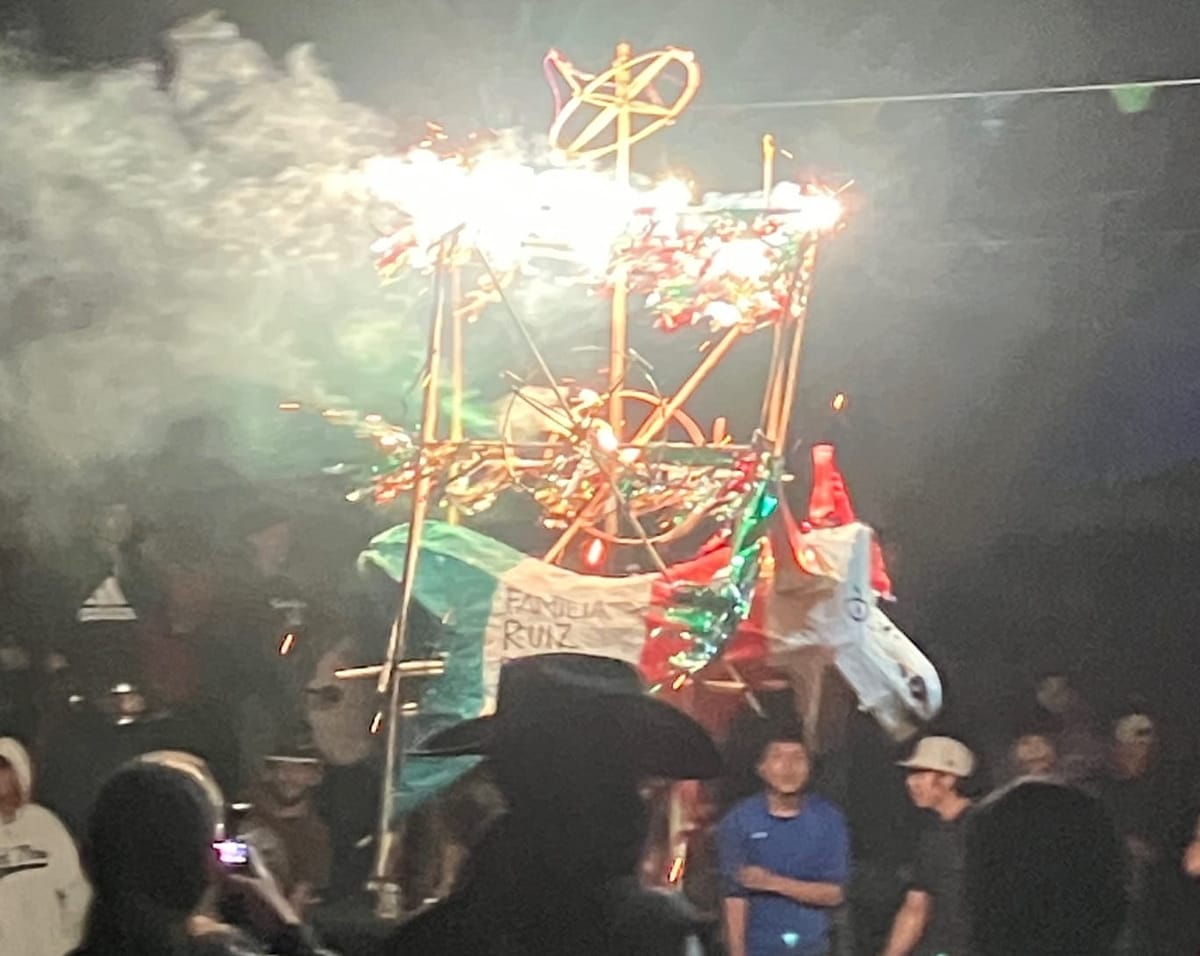
Mario invited me to his barrio, called Tetela, in the evening, where we shared cervezas and mescal that his friend Marco brought over, sitting in front of Mario’s house. After a while, we heard the parade approaching, and we went out to the street join in. A raucous band of beat-up horns and bass drums was accompanied by a sea of folks, the entire neighborhood it seemed, marching down the hill and around the corner to the churchyard. Some of the participants carried papier-mache bulls laden with fireworks, and another group was wheeling an enormous bull down the street. The band played a single song, four lines long, over and over, all night long.
At the churchyard the neighborhood assembled, the band took the stage, some folks danced, or at least bounced. Carnival rides spun just outside the walls. After a while, a brave soul with a bull mounted on his shoulders leaned forward, and another brave soul held a lighter to a fuse, and off the toreador went running around the churchyard as if they were trying to escape the beast they were carrying.
This happened around thirty times. “Nunca en Estados Unidos,” I said to Mario, as a rocket caught me on my right hip.
February 6 in Tetela, Mario mentioned to Marco and me, marked the start of the Carnaval season. It “officially” ended this week with a burst of events in the various pueblos around the state of Morelos. On Saturday we drove to Tepoztlán, about 15 miles from Cuernavaca along the edge of the sierra, for the first day of its long weekend of events.
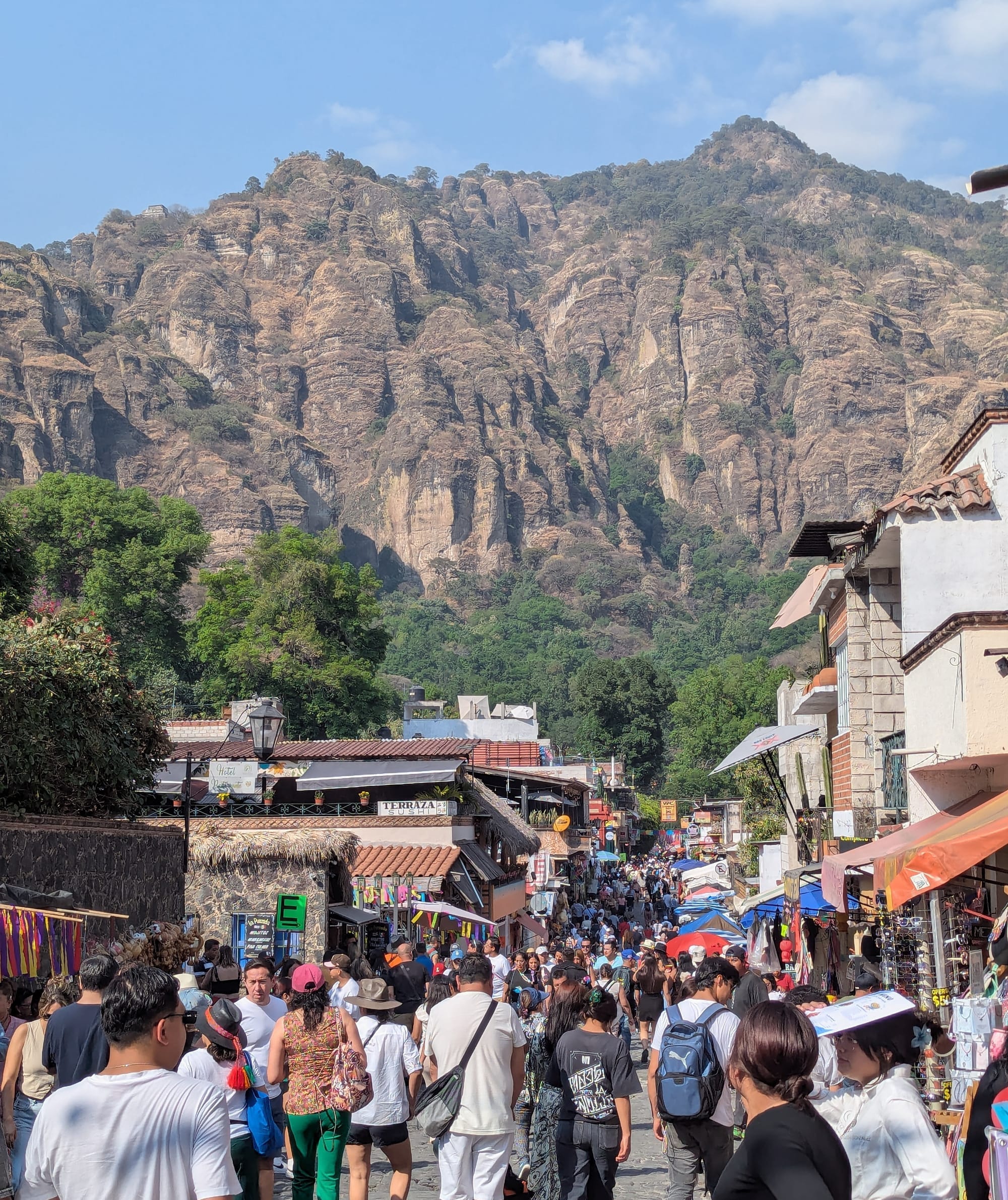
Tepoztlán - a Nahuatl name meaning “place of abundant copper” - is stunning and overtouristed. It’s hard to separate the two these days. The village sits below a ridge topped by an Aztec temple, the main street looking straight up toward the mountains. At the end of the street you can enter a protected area and hike up to the temple, and by “hike” I mean climb a thousand feet of stairs. The main street, being overtouristed, is full of bars and restaurants, hotelitos, and shops offering actual crafts and other shops offering trinkets. On this day, it was also crammed with people, and that was at 1:30 or so in the afternoon.
We made our way to the zócalo, the main square, where we found the day’s schedule - purported - and Mario chatted with a man wearing the robe of a Chinelo and holding in his arms the delicately beaded crown and mask.
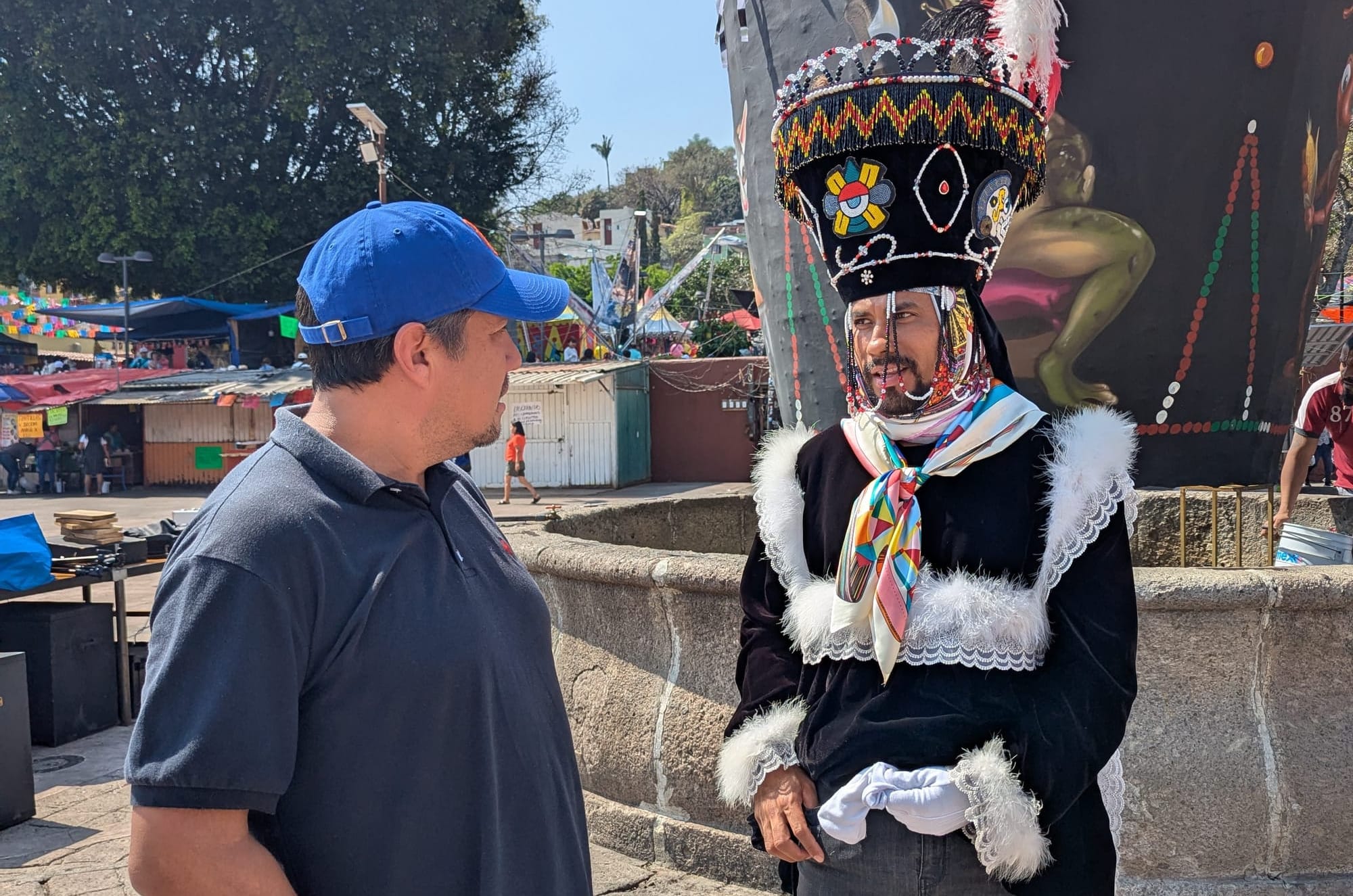
Chinelos emerged as a way to mock the Spanish a couple hundred years ago. They wear elaborate robes and crowns, and traditionally have blue eyes and long, pointed beards, and do a clownish dance. They can be found in various places in Mexico, but originated and are most frequently found in the state of Morelos, where the Spaniards, and their heirs, maintained haciendas for the production of sugar and were particularly oppressive to the native or Mestizo workers.
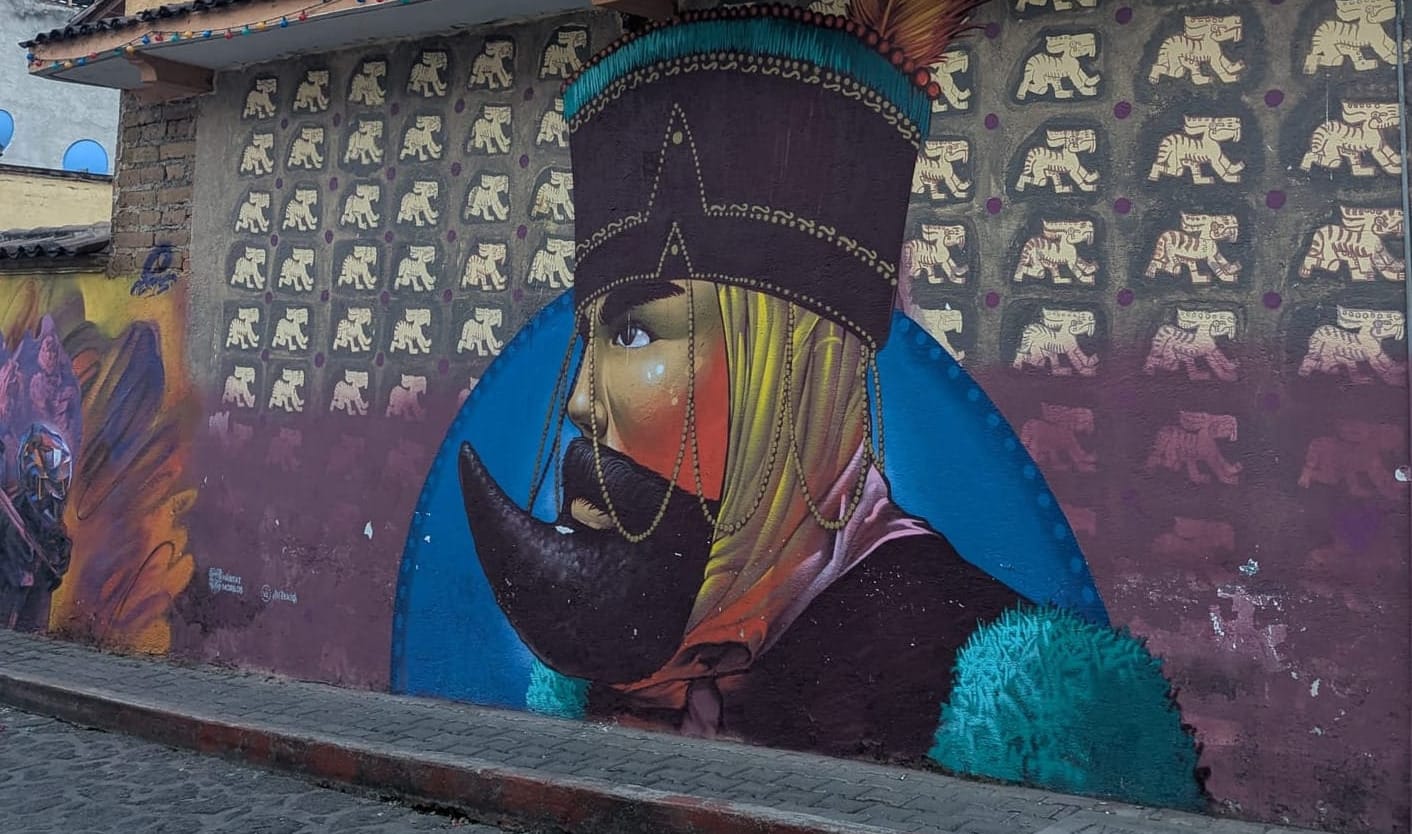
The sugar haciendas are mostly gone - although we had passed one a few weeks earlier on the way to Taxco - but the tradition survives. And not just the costumes and dance; the tradition of mocking wealth and privilege, and the customs and mannerisms that come along with them. To my mostly uneducated eye, it is a way of re-asserting the rightful centrality of the pueblo.
(That word again. We'll get to it someday.)
And in gentrified, overtouristed, beautiful Tepoztlán, the elites come from all over to drink and buy trinkets and see themselves mocked. Me too.
The Chinelos were not scheduled to make their entrance until 5:00 in the evening. We had some time to kill. We ate quesadillas in Tepoztlán’s new mercado, an impressive structure with a grand view of the valley. The proprietor of the joint where we ate told us that the market tenants were not permitted to sell alcohol, so afterward we made our way over to a bar he recommended, where we drank absurdly large micheladas and watched as people danced to “Mi Pobre Corazon.” (You know it better by another name. It loses something in the translation.)
By the time we were heading back toward the zócalo, the main street was so jammed we couldn’t make our way through. We heard a band playing that same four-line tune, saw banners waving above the crowd, heard cheers, but saw nothing. We backtracked and zig-zagged and arrived at the fenced-off square, where we listened to rock and roll blaring from the carnival rides - bigger and more terrifying than in Tetela - while we waited an hour or so for the parade to start - well over an hour later than scheduled. Eventually various groups of Chinelos entered the plaza, but our legs gave out before the dancing began.