guadalupe hidalgo and all that (dispatch #6)
The version of the Mexican-American war commemorated by Donald Trump this week bears little resemblance to the way it is remembered south of the Rio Bravo.
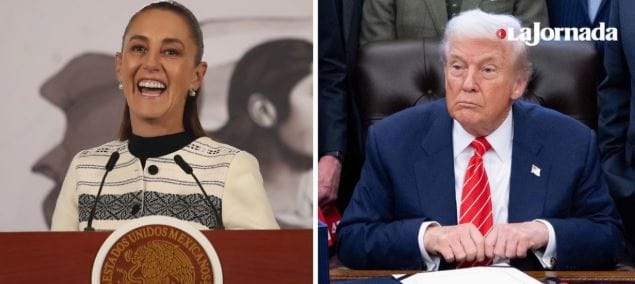
I don’t know how much the Trump administration’s commentary on the anniversary of the Mexican-American War made news in the United States. Not much, I should think, during a week of - everything. I did see an article by the Associated Press about it, which noted the government's statement and its various mistruths and untruths. But I imagine other things occupied the space above the fold.
Here in Mexico, the U.S. president’s comments and the Mexican president’s response, were not necessarily the top story, but I didn’t have to scroll to find them in La Jornada.
The AP’s article describes various exaggerations and lies, and quotes various historians’ efforts to set the record straight. In case you don’t want to read that, Hammett’s summary is as follows: Texas seceded from Mexico in 1836, mostly to preserve landowners’ ability to hold slaves. Mexican president President Antonio López de Santa Anna (remember that name, you’ll need it later) went to war to recapture Texas, which had declared itself an independent republic. He defeated the Texan army at San Antonio (you probably do remember the Alamo), but then FAFO’ed and lost at San Jacinto, after which he signed the Treaty of Velasco, granting Texan independence.
Fast forward to 1845: Texas had failed as a country, and couldn’t maintain its borders, and ran to the United States begging to be taken in as a kind of runaway stepchild. In absorbing Texas, the United States got the whole package including the border disputes (Mexico, despite the treaty, never recognized Texas as a nation). President James K. Polk, a southerner sensing an opportunity to strengthen the pro-slavery movement as well as a potential land-grab, sent future president Zachary Taylor (another southerner, and may I add, fuck these guys) to Veracruz, whence he and his troops marched to Mexico City, captured the capital, and dictated their demands, which included not merely Texas but the whole of New Mexico, Arizona, California, and beyond - more than half of Mexico’s territory. All of that was spelled out in the Treaty of Guadalupe Hidalgo, which the U.S. administration commemorated this week.
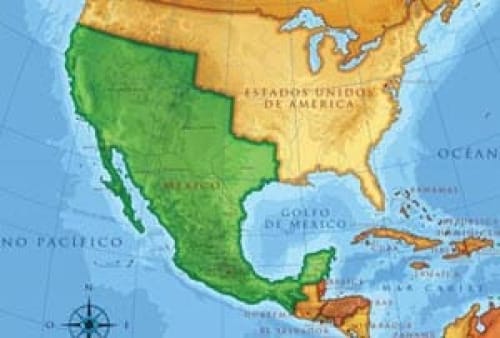
(I am not sure that’s a 100 percent objective history, but you can read the Wikipedia articles same as I can.)
I am sure I was told some of this in high school, and that there was a textbook I was supposed to have read. I can’t say I retained much of it. In any case, I am sure the version I read of these events in Columbus, Ohio, in 1983 was somewhat different from the way I encountered them in the Museo de Caracol in Chapultepec Park.
I’m going to assume you didn’t follow the link (1) to the Trumpist version of this history It’s somewhat less objective than mine. It’s full of phrases like
reasserted American sovereignty, and expanded the promise of American independence across our majestic continent
and
destined by divine providence to expand to the golden shores of the Pacific Ocean
and
With the promise of Manifest Destiny beating in every American heart (2)
and goes from there to laud the president for defending the border, etc. (As written, it actually continues with the president lauding himself, but I’m assuming the message was dictated by whichever member of the Triumpvirate - Rubio, Miller, or Noem - had access to the content management system that day. My money is on Rubio.)
Really, you didn’t miss much, except an unusually forthright demonstration that history is written by the victors.
The version recalled this week in Mexico is somewhat different. Besides a news story that for the most part simply translated the Casa Blanca's statement, the newspaper La Jornada ran an analytical piece looking at the broader context of U.S.-Mexico relations:
The messages from the White House just in recent weeks have gone from celebrating the anniversary of the robbery of half of Mexico by the United States, to praise of President Sheinbaum, to demands that our country obey orders from Washington about Cuba, to promoting conspiracy theories that Mexicans want to reconquer their lost lands in a "coup" against the [United States]. (3)
“Robbery,” more or less as statement of fact.
And separately, an editorial titled “Trump Glorifies Plunder” (Trump glorifica el despojo) signaled where it was going in its first three words, “Con el pretexto”:
With the pretext of the 178th anniversary of the signing of the Treaty of Guadalupe Hidalgo, with which Washington wrested from Mexico half of its territory, president Donald Trump published Monday a statement full of insults against our country ... In the second line, he called a “legendary victory” a shameful historic episode that the political class of his country prefers to avoid when recounting its military glories. (4)
And added:
He concluded the chain of hoaxes with the grotesque assertion that the United States heroically captured Mexico City. The fall of the capital was a confrontation involving heroic figures, yes - cadets and Mexican civilians against a professional army - whose result was decided not by the bravery of the aggressors but by the simple fact that the defenders didn’t have bullets. (5)
Those cadets stand as counterpoint to the defenders of the Alamo - ignoring all manner of questions such as who was invading whom, and for what reasons ("the politicians and citizens of the North know very well that the conquest of Mexican territory reinforced southern slaveholders by expanding the atrocity of their economic model.”) (6) The U.S. Army had advanced well into Mexico City, nearing the castillo that stands atop the small mountain in the center of Chapultepec Park. At the time Chapultepec Castle was a military academy. General Nicolas Bravo, defending Mexico City with half as many troops as needed, ordered a retreat, but six cadets fought on to the death, remembered today as martyrs.
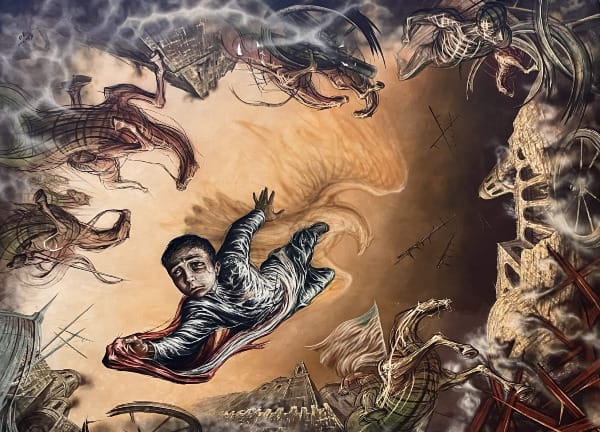
Just to say: whatever place the Alamo holds in the beating hearts of U.S. citizens, my firm sense is that the story of the Niños Héroes and their cause - truth, legend, something between - holds greater significance to the people of Mexico.
But in case La Jornada leans a little to the left, what says the columnist for El Universal?
Trump laid visible his ignorance and lack of historical rigor, as well as his arrogance and tendency toward threats, when on Monday he celebrated as a “heroic act” the unjust U.S. invasion.... (7)
And what of La Presidenta’s response?
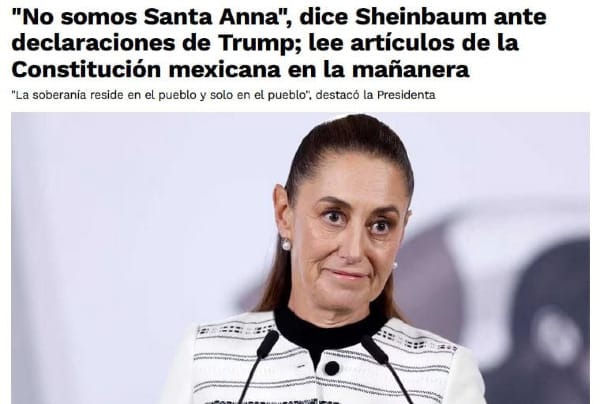
“You already know what my opinion is, we are not Santa Anna, we have to defend our sovereignty.” Santa Anna, reminder, didn’t agree to give away the half of Mexico, but he signed off on the secession of Texas - an act, one might say, of appeasement that worked about as well as that tactic usually does.
“El pueblo de México,” said Sheinbaum,
under no circumstances will accept interventions, interferences, or any other act from foreigners that injures the integrity and independence and sovereignty of the nation, such as coups, involvement in elections or violations of Mexican territory whether it be by land, water, ocean or airspace.
(I left the word “pueblo” there intentionally. Read it as “people” if you will. It’s more than that, and someday when I have a better ability to explain it, I’ll try to.)
Does this matter? Maybe this one incident means nothing; maybe the attention paid to it represents the instinct of news editors, as true in Mexico as anywhere else, to generate clicks. Does it matter? The - um - genius of Trump is that whatever he did on Monday was forgotten by Tuesday - here in Cuernavaca, my friends were asking me what Cuba was going to do without petroleum (“¿lo qué, ahora?” was more or less my response). By Friday the man had said and done half a dozen things too repellent to mention here.
Maybe it matters because politically, it demanded a response by Sheinbaum, maybe not just in word but in deed. It makes the cost of cooperation higher for her, and equally reminds all of Mexico that any treaty the United States enters into isn’t worth the paper it’s signed on. (Arguably that has been the case throughout the whole of U.S. history, but it’s kind of the nation’s opening position in negotiations at this point.) Which in turn makes the actions of a demented president and a bellicose secretary of state less predictable. That doesn’t seem good.
Given the history, the feelings on this side of the Rio Bravo seem understandable, maybe justifiable. As La Jornada’s analysts concluded: Al parecer, aún continúa esa guerra hoy. “It appears that that war continues today.”
(1) And really, who could blame you for not wanting that URL in your browsing history?
(2) Getting ready to write this post, I decided I needed to read Thoreau’s “Civil Disobedience.” I had never read the essay before, which is ridiculous given that my undergraduate thesis was on Walden. I should probably return my diploma. Be that as it may, at least one person alive in 1848 didn’t hold Manifest Destiny in his beating heart:
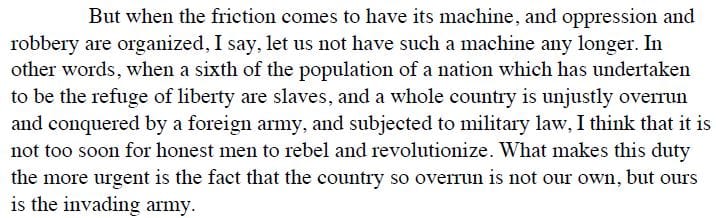
(Of interest perhaps to nobody, the original title of “Civil Disobedience” was “Resistance to Civil Government.” It’s not obvious that Thoreau was committed wholly to non-violence; one could read a number of ways the sentence, “This people must cease to hold slaves, and to make war on Mexico, though it cost them their existence as a people.” But I’ll leave that judgment to those who have read the essay before, you know, this week.)
(3) “Los mensajes de la Casa Blanca sólo en las semanas recientes van desde la celebración del aniversario del robo de la mitad de México por Estados Unidos a elogios a la presidenta Sheinbaum, a declaraciones de que nuestro país obedece órdenes de Washington sobre Cuba hasta promover teorías de conspiración de que mexicanos desean reconquistar sus tierras perdidas con un ‘golpe’ contra la potencia.” (All translations mine.)
(4) “Con el pretexto del 178 aniversario de la firma del Tratado de Guadalupe Hidalgo, por el cual Washington arrebató a México la mitad de su territorio, el presidente Donald Trump publicó el lunes un comunicado repleto de insolencias contra nuestro país y abiertas amenazas de uso de la fuerza contra todo el planeta.”
(5) “Remata la cadena de bulos con la grotesca afirmación de que Estados Unidos capturó la Ciudad de México heroicamente, cuando la toma de la capital fue el enfrentamiento entre heroicos –ellos sí– cadetes y civiles mexicanos contra un ejército profesional, cuyo resultado se decidió no por el arrojo de los agresores, sino por el elemental motivo de que los defensores no tenían balas.”
(6) From La Jornada's editorial. “[P]ues los políticos y ciudadanos del norte sabían muy bien que la conquista del territorio mexicano reforzaría a los esclavistas sureños mediante la expansión de su atroz modelo económico.” Candidly, I think La Jornada overestimates the historical knowledge of the average estadounidense, whether citizen or politician.
(7) “Trump dejó ver su ignorancia y falta de rigor histórico, así como su soberbia y proclividad a la amenaza, cuando el lunes pasado celebró como un ‘acto heroico’ la injustificable invasión estadounidense ...” Paywalled from there, sorry, but you get a sense of where it might be going.
(8) “Eso fue un debate en el siglo XIX. Somos una República representativa con estados libres y soberanos, una federación. Y luego le agregamos lo de abajo en el 2025: el pueblo de México bajo ninguna circunstancia aceptará intervenciones, intromisiones o cualquier otro acto desde el extranjero que sea lesivo de su integridad e independencia y soberanía de la nación, tales como golpes de estado, injerencias en elecciones o la violación del territorio mexicano sea hasta por tierra, agua, mar o espacio aéreo.” Emphasis in original.