An explanation, such as it is, of this project is here.
Wednesday I went walking to find a branch of Scotiabank, which was a total goose chase, or maybe a MacGuffin. Along the way I saw what purports to be the oldest church in the Americas, and noted the location of the library and a panadería called Pan y Miel (“Bread and Honey”) and a bar called la Crudisa (“Raw Food,” i.e. ceviches, but also possibly a play on crudo which means “hung-over.”) And as I was passing the military base I saw a crowd, many of whom appeared to be press, around the gate across Avenida Emiliano Zapata.
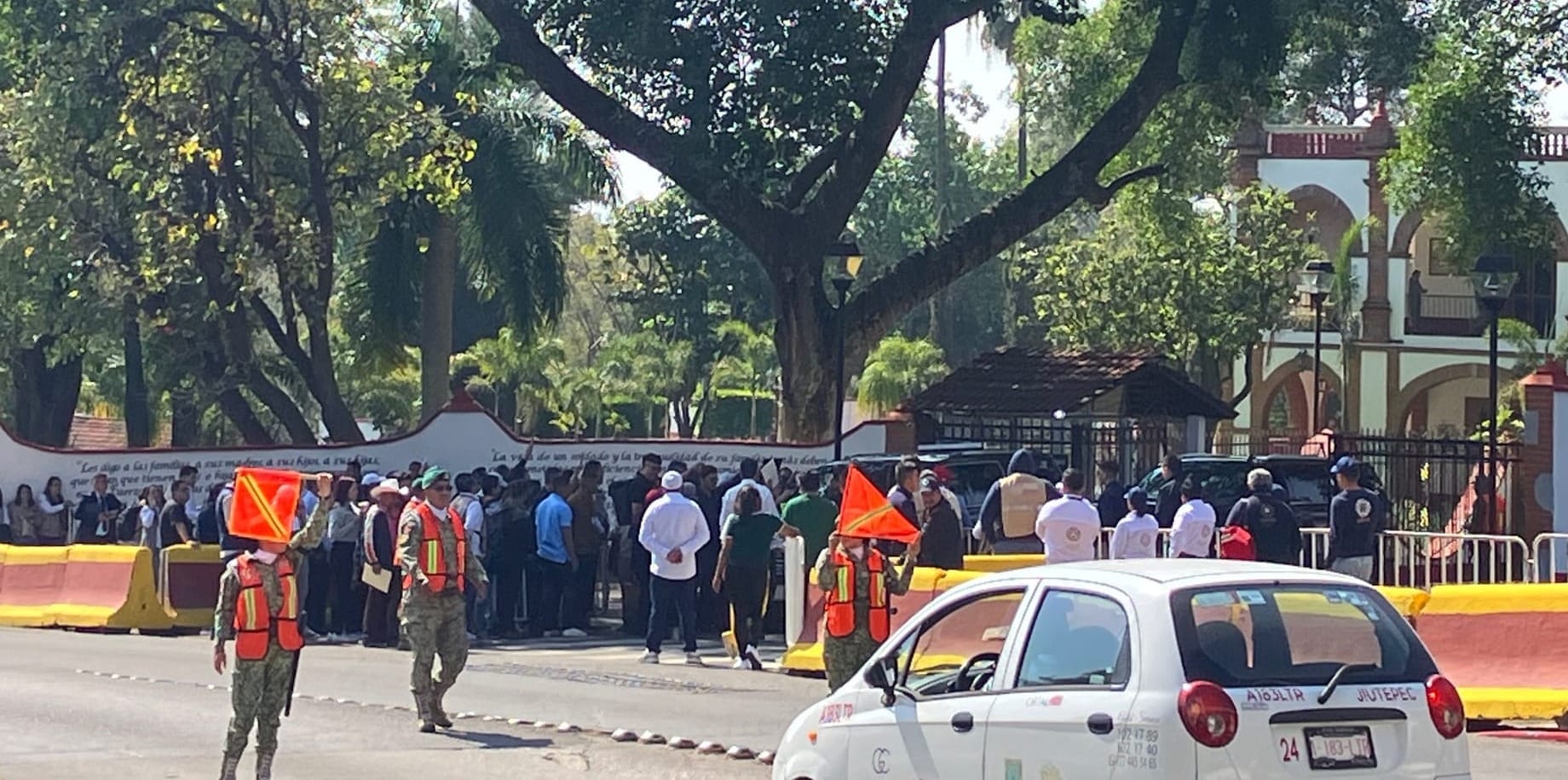
“Buenos días,” I said to a woman and her daughter. (You always say “buenos días.”) “Quien es?”
“Claudia!” she replied with a big smile. She may have added the president’s last name, but my sense is you don’t really have to say her last name. Also, “Sheinbaum” does not come naturally to Spanish speakers.
So I waited, because the cadets were stopping traffic - my friend Jorge had told me the day before that the only thing he’s ever seen cadets do in their training is direct traffic and sweep the sidewalk, and I told him, “we say marchando alrededor de la bandera.” It appeared La Presidenta might be about to appear, and I thought I might be able to peer at the tinted windows of her black SUV.
But peering turned out not to be necessary.
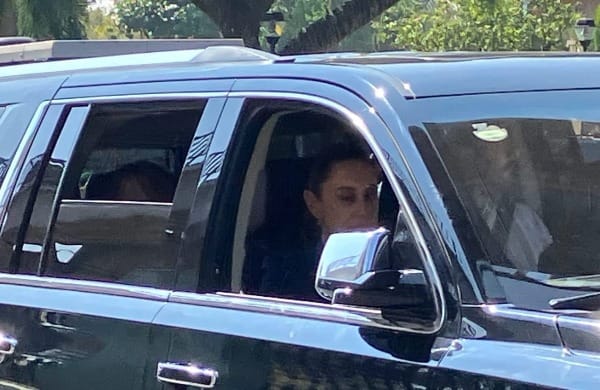
(She might have smiled at me.)
My friend Martha explained that Sheinbaum is starting the year with morning events at various cities in Mexico, and that Cuernavaca was the first. Mostly she talked about a 40% reduction in the murder rate last year, but naturally the subject turned to the U.S. president's comments about doing something in Mexico.
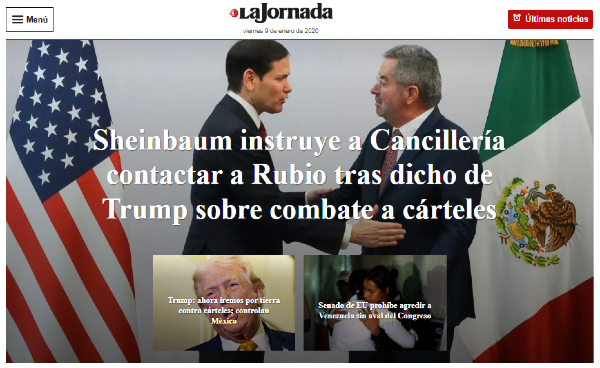
“Sheinbaum instructs the Chancellor to contact Rubio after Trump's statement about combatting cartels,” as La Jornada put it - a tone that seems quite careful, but my sense of Sheinbaum is that that’s kind of her M.O. She’s something of a poker player. Maybe that’s why she didn't smile at me.
But that’s just my superficial reading, based on, I don’t know, some conversations in my Spanish classes and occasional news articles and YouTube videos. And it underlines the information disparity between the two nations. It’s pretty easy in the United States not to know much of anything about Claudia Sheinbaum. I suspect, if you’re not taking Spanish classes online, it’s pretty easy not to know the name “Claudia Sheinbaum.” (I tried to find a poll indicating what percentage of USians know who the president of Mexico is, but the Google claims none exists.)
Martha and I talked about that information disparity. I mentioned how little time we had spent in my history classes on the Mexican-American War, which certainly didn’t dwell on the Mexican perspective of ceding half its territory. I stumbled over the year the U.S. Army entered Mexico City; Martha didn’t hesitate to recall it.
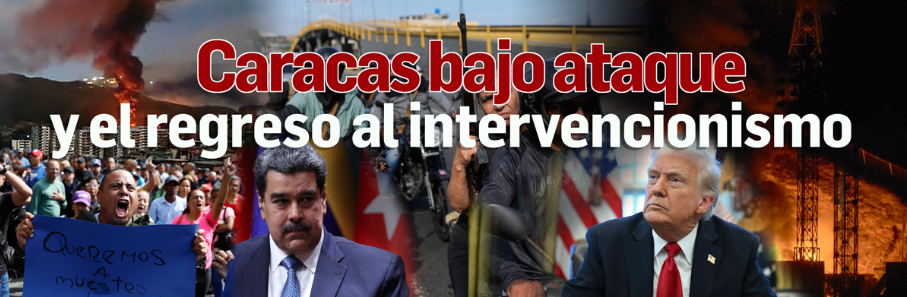
All to say, regardless of what estadounidenses think of the ravings of the so-called president and his minions - true threats, bluster, or the ravings of a demented fool - here south of the Rio Bravo, it’s none of the above; rather, their neighbor returning to its old ways. As La Jornada puts it, “The Return to Interventionism.”