a thanksgiving story
A tale of gratitude
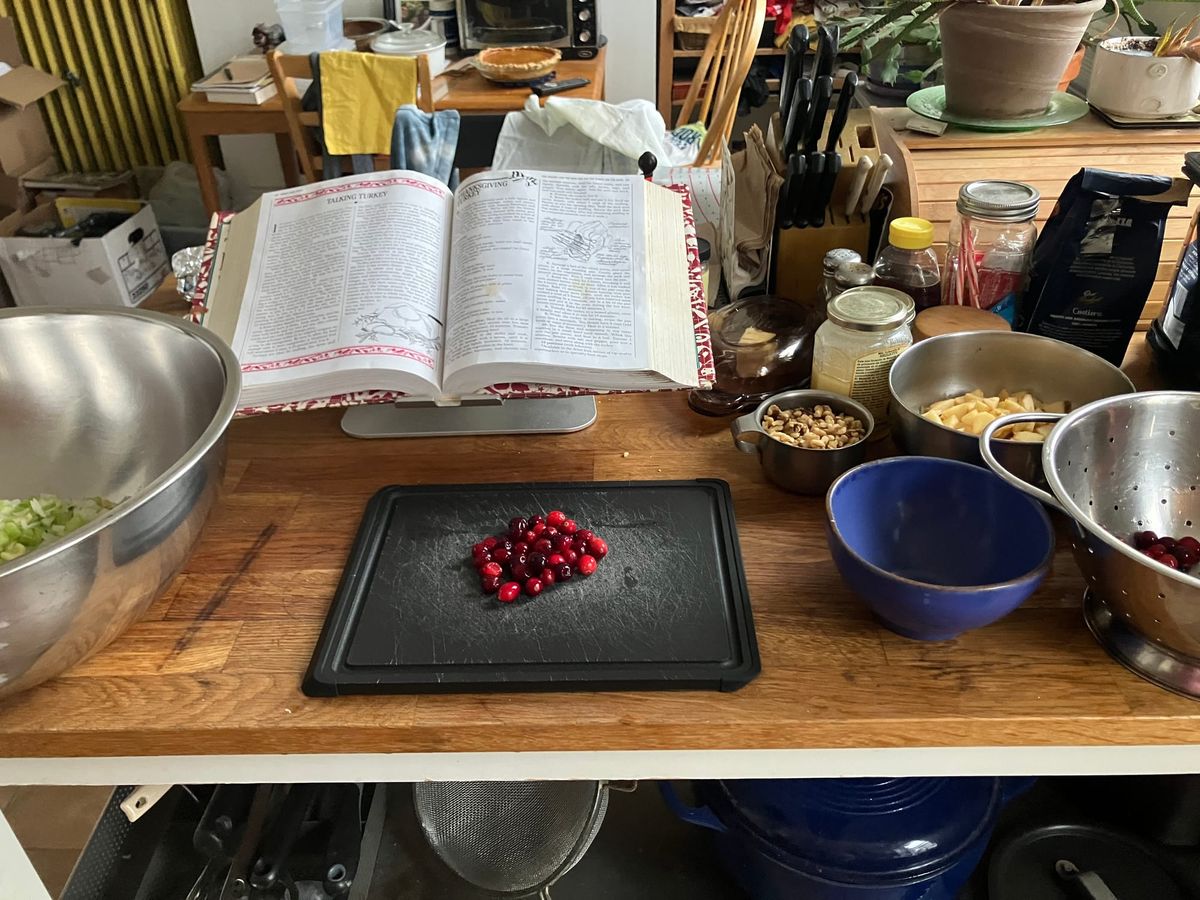
The pie is baked and the turkey is in the oven, so I have a moment to tell you all a story. It’s not really my story to tell, but I’ve lost track of Tony, who told it to me. It deserves to be shared.
Back when I worked at the bank and when we still wore proper clothes, Tony was my dry cleaner, on Union Street in Brooklyn. Sometimes I would bring him my clothes, and sometimes I would stop in to ask him to hang posters for our next theater production, and often I would bring him costumes to clean.
I went in to drop off clothes late one evening the week of Thanksgiving. He was just about to close up shop. It was dark out.
“Do you celebrate Thanksgiving?” I asked him. It was a stupid question. He let me know it was stupid; “I’ve lived in this country for thirty years,” he told me. And he went on to tell me how he arrived in this country.
Tony had fled Vietnam on a raft or a small boat of some kind, wearing only a t-shirt and shorts. This would have been in the late 1970s, after the end of the war. Somehow he and his fellow refugees survived the ocean voyage and arrived at the Philippines. That’s about 800 miles of open sea. At the Philippines he was brought to a refugee camp, and eventually from there to another refugee camp in the United States, in the state of Washington. He stayed there a while. He was clothed and fed while they looked for a place for him to stay permanently.
Eventually they found a sponsor family in the Bronx. Tony flew across the country and met his sponsor family. Then, he told me, the people he was meant to live with kept the support payment and put him out on the street. He found a building where he could sleep under the stairs without being molested too much. Somehow, he would scrape together a little bit of money, and he would go to a diner, a lunch counter of some kind, where he would buy a hamburger.
“And I was so happy,” he said, describing eating a hamburger at that lunch counter in the Bronx. As you read this, you have to imagine him telling me the story, standing behind the counter of his dry cleaning shop on Union Street, on a dark November evening, when he should have been closing up his shop and heading home, drawing out the word “so” to last two or three seconds. “I was so happy.”
After Tony went to the diner a few times, the owner suggested he could make a little money delivering newspapers to people in the hospital across the street. Tony would go to a newsstand and buy papers, and then bring them to the hospital and walk up and down the halls, selling copies to whoever wanted to buy them, for a little markup or maybe collecting tips. He kept doing this for a while. “And I was so happy.”
People got to know him. Somewhere along the way, someone asked if he wanted a job working in the back of a dry cleaners. Mopping the floor, moving boxes, that sort of thing. A better job, a little more stable. “And I was so happy.” He worked hard, and he paid attention. He learned how to do more than mop the floor: how to work the clothes press and the other equipment. Eventually he was promoted from doing the odd jobs to a regular role, cleaning the clothes, waiting on people at the counter.
You know by now what he said when he told me that.
Way led on to way; more than that, hard work paid off in Tony’s case. I don’t remember all the details of how it went from there, but somehow he ended up owning his own dry cleaning shop, and then a second and a third. Another family member managed the one in Bay Ridge. His son went to high school and played trombone in the school orchestra.
It was late; we both had to get home. I mostly managed to hold back the tears until I got to my car. I quit working at a job where I needed ironed dress shirts, so I saw Tony less, although I still brought him costumes. Then I moved away, and rents went up on Union Street, and people stopped needing dry cleaning as much as they used to. I doubt our paths will cross again. But I think of Tony from time to time, especially around this time of year, and the story of his life as he told it to me — not just the version you could read in a history book.
It is a story about the promise of this country, often broken, broken especially now, a debt unpaid and still pending. And it is a story about choosing gratitude when one might with good reason choose to be bitter instead.
I believe there are four keys to happiness: gratitude, optimism, kindness, and the capacity for delight. They are habits of mind. They are habits that you can learn, that I have had to learn; they don’t come easily to me. You need all of them. And I think all of the others depend on gratitude.
Whatever the myths about the first Thanksgiving, happily being put to rest, and whatever the intentions of the first proclaimed Thanksgiving, holding the nation together during its bloodiest war, it remains for me the best of our holidays, the one that can, if we pay attention, remind us of the best of ourselves. And that’s the lesson Tony shared with me that November night on Union Street.
Happy Thanksgiving, y’all.