what it was like in washington (a follow-up)
The longer I stayed, the more I became aware of how Washington holds and displays the tensions that have run through our history from the start.
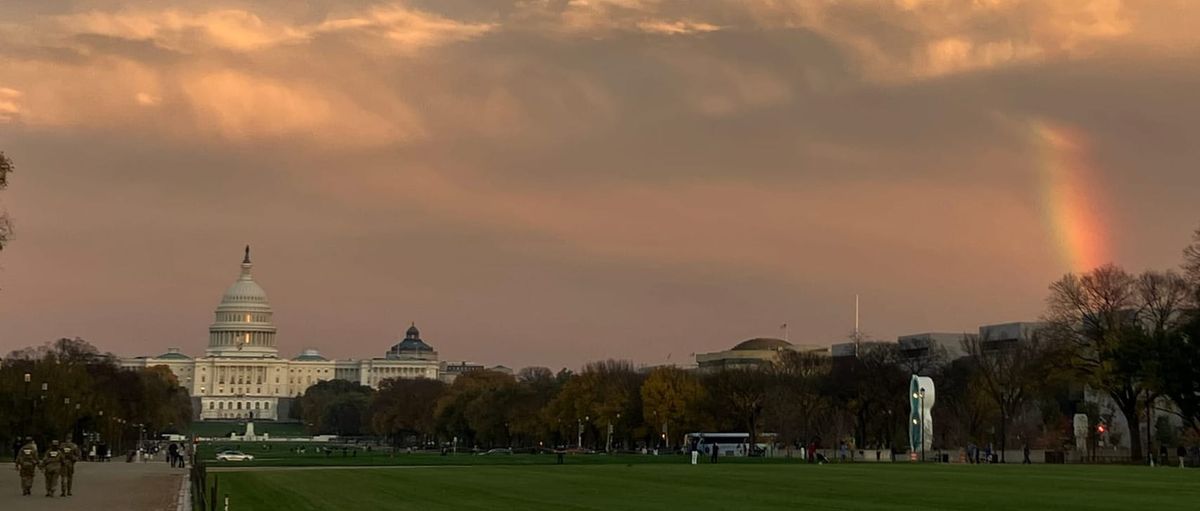
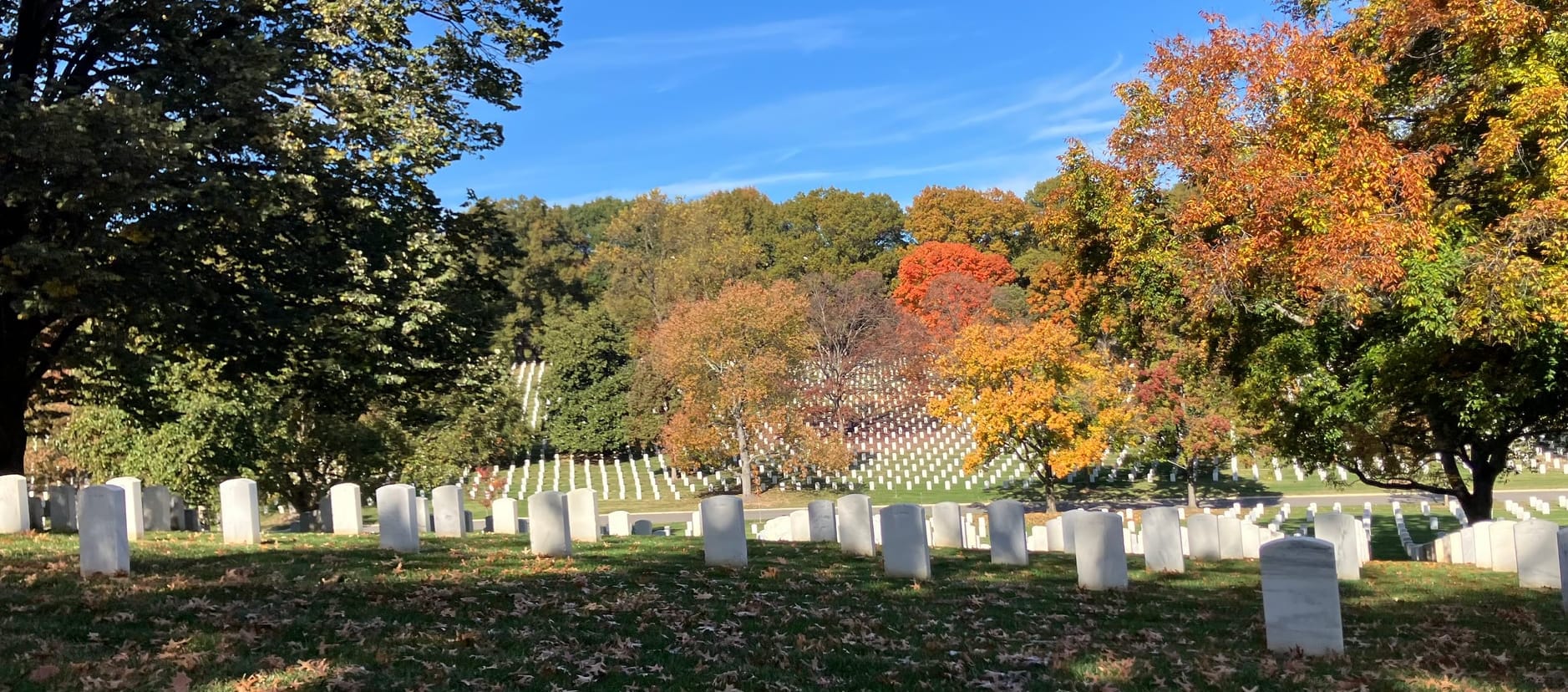
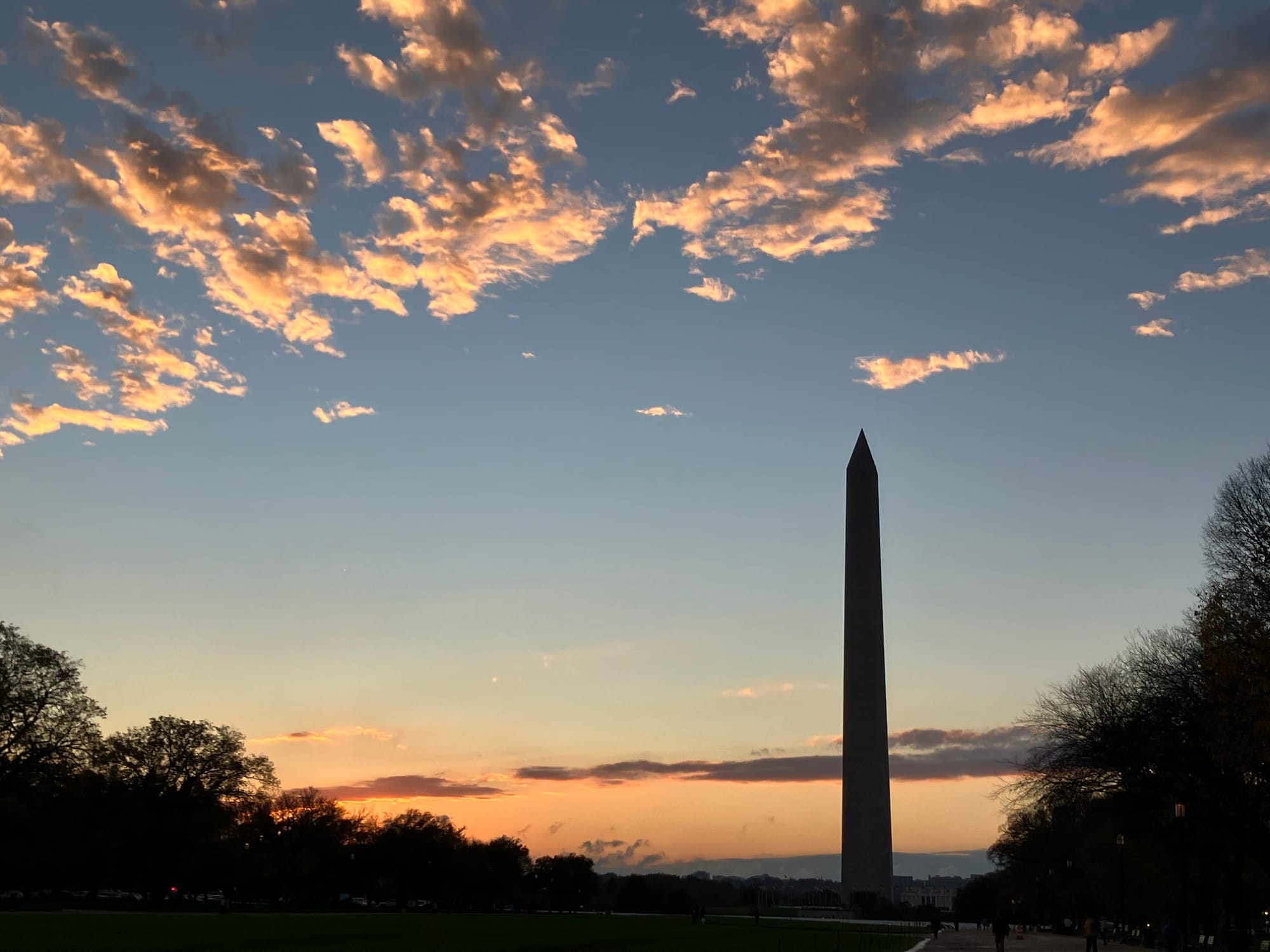
I was back in Washington, D.C., last week with Mom, who had suggested we could go there after I had visited Ohio. She had been reading about the Smithsonian and the so-called President’s efforts to remake the museums into places that won’t make people feel bad — especially, into places that won’t make racists like him feel bad. So we toured the National Museum of African American History, and the Museum of the American Indian, and the National Portrait Gallery (which is also, in a quite confusing manner, the Smithsonian American Art Museum), and the Capitol. We saw the Washington Monument, but did not go to the top, and went to Arlington National Cemetery, which I had never been to before. I’m more comfortable in cemeteries than I used to be. It was quite moving to see all those rows of white markers.)
We didn’t see much of the White House, and I realized after Mom had left that that was partly because the area around it has been turned into half construction site and half armed camp. You not only can’t approach it, you can barely catch a glimpse of it. And that seems a shame, or maybe is infuriating, because it’s meant to be “the People’s House,” and because the current occupant is so bent on declaring it his.
Mom described some of what we saw, particularly the Museum of African American History, as “heavy.” Well, it is. Somber, certainly. Sad; infuriating in a deeper way. It makes me feel powerless: Here is this history, which in my childhood was mostly glossed over if it was addressed at all, that I cannot change. That I have inherited, my birthright, my birthwrong, and however much I may not be responsible for things that happened four hundred or three hundred or fifty or five years before my birth, it is hard to escape that feeling of responsibility. At least, of the responsibility to do something about it.
Maybe that’s why the current occupant objects so strenuously to some of the exhibits.
And.
As I said to Mom, as we were leaving the African American history museum, one can look at the story being told there different ways. One of them, surely, is a story of the profound injustice that underlies the entire history and current wealth of this nation, the willingness to tell oneself, in Winthrop’s words,
GOD ALMIGHTY in His most holy and wise providence, hath so disposed of the condition of mankind, as in all times some must be rich, some poor, some high and eminent in power and dignity; others mean and in submission.
And that story of injustice is true.
And, there is another story to be told out of those same facts, a story of resistance and resilience and, as the song says, overcoming, a story of voices lifting and singing, of the continued striving toward the ideals expressed in Jefferson’s words, which you already know.
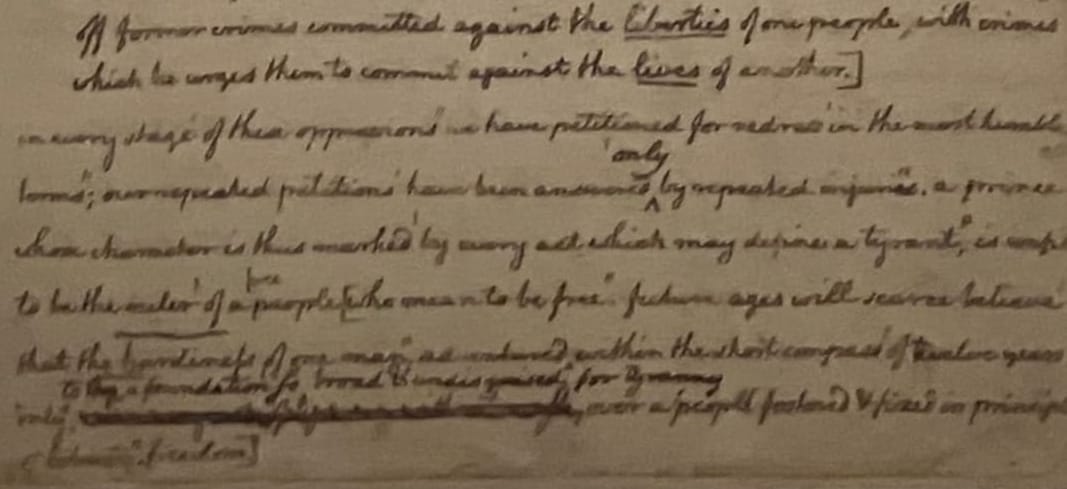
And that story will be true if we make it true.
The longer I stayed in Washington — I hung around a couple days after Mom returned home, seeing the Wright Flyer and the Apollo capsule, and visiting the Library of Congress which among other delights has a painting on its ceiling of a bunch of naked dudes playing baseball — the longer I stayed, the more I became aware of how Washington holds this tension and exposes it in spite of the nation’s best efforts to focus on unum and not pluribus.
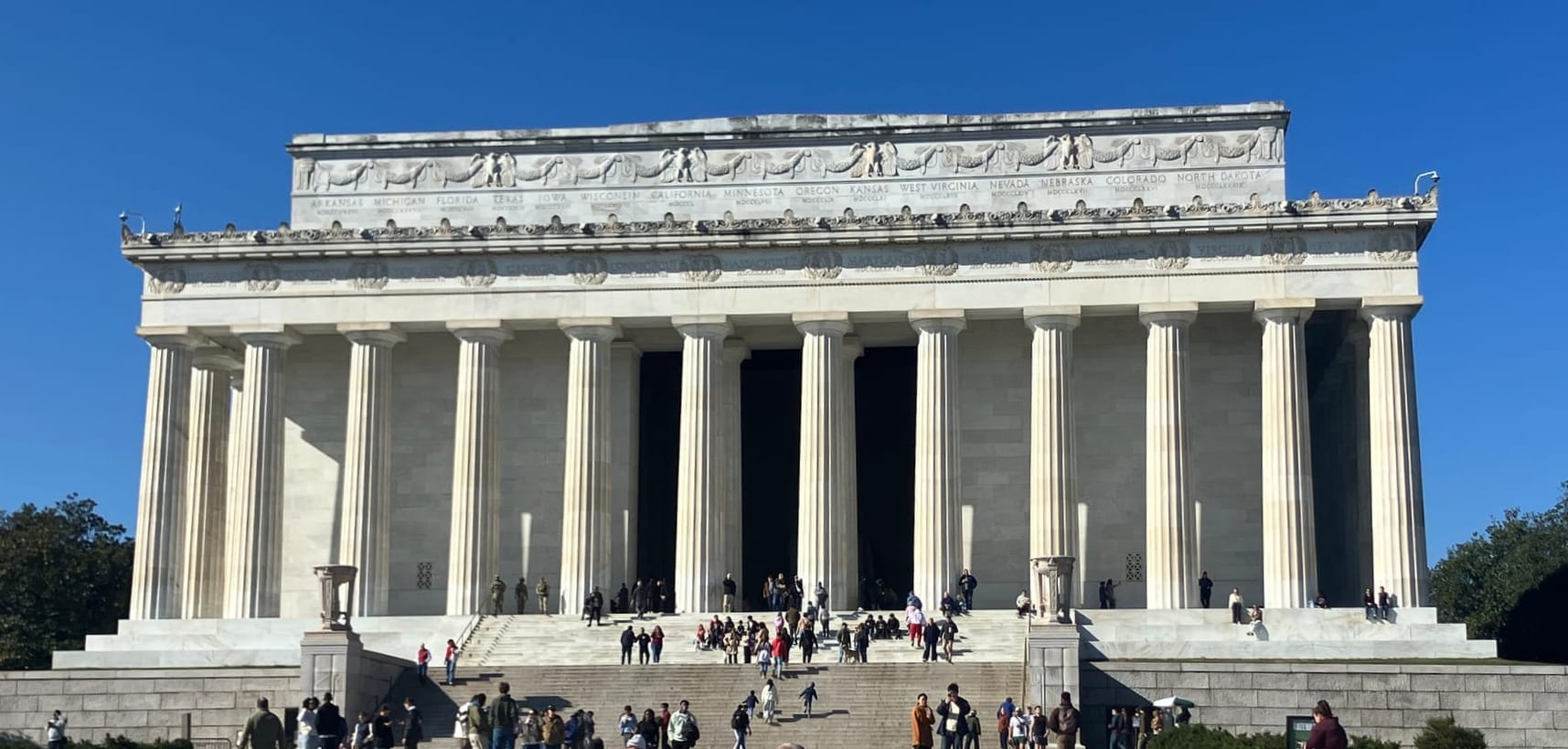
At one end of the National Mall, Lincoln’s memorial, where his second inaugural address, engraved on the wall, asks his countrymen to go forward “with malice toward none, with charity for all,” and more explicitly observes that
It may seem strange that any men should dare to ask a just God’s assistance in wringing their bread from the sweat of other men’s faces but let us judge not that we be not judged.
At the other end of the Mall, the Capitol, where before you can tour the rotunda and see the statuary, they show you a movie called, yes, E Pluribus Unum, which I will say acknowledges imperfections in the nation’s history; and where, after the movie, you will see enormous paintings in the rotunda depicting Christopher Columbus being greeted warmly by natives, and statuary that encompasses, somehow, Rosa Parks and John C. Calhoun.
You can look at that statue of Calhoun and see a great statesman, I guess, whom the citizens of South Carolina have chosen as their representative in the Capitol, or you can see the ongoing defiance by the powers that be in South Carolina to acknowledge the sin of slavery. Or maybe you can see both and live in the discomfort. Or maybe it’s easy for me to say that. Another man had a different reaction to having to face Calhoun’s legacy, day after day, in his workplace, and I cannot say his response was wrong.
You can look from the front of the Capitol past Lincoln’s memorial to the graves of Arlington, or go up the hill to watch the changing of the guard at the Tomb of the Unknown Soldier, and honor those who gave the last full measure of devotion. Or you can see those markers as the consequence of a long ethic of embracing violence as a ready solution. And again, you can see both.
Some, you know — the current occupant, obviously — would have you see only one facet of this history; would block the view of those gravestones with a monument that only tells a story of triumph. It would be more comfortable, I guess, to have a national capital that tells a simpler story. It would be more comfortable to have a history that were simpler. That is not the birthright we have been given, and in my humble opinion it is not the national capital we should have.
notes for nobody but myself is a reader-supported publication.
Please subscribe, or become a paying member.