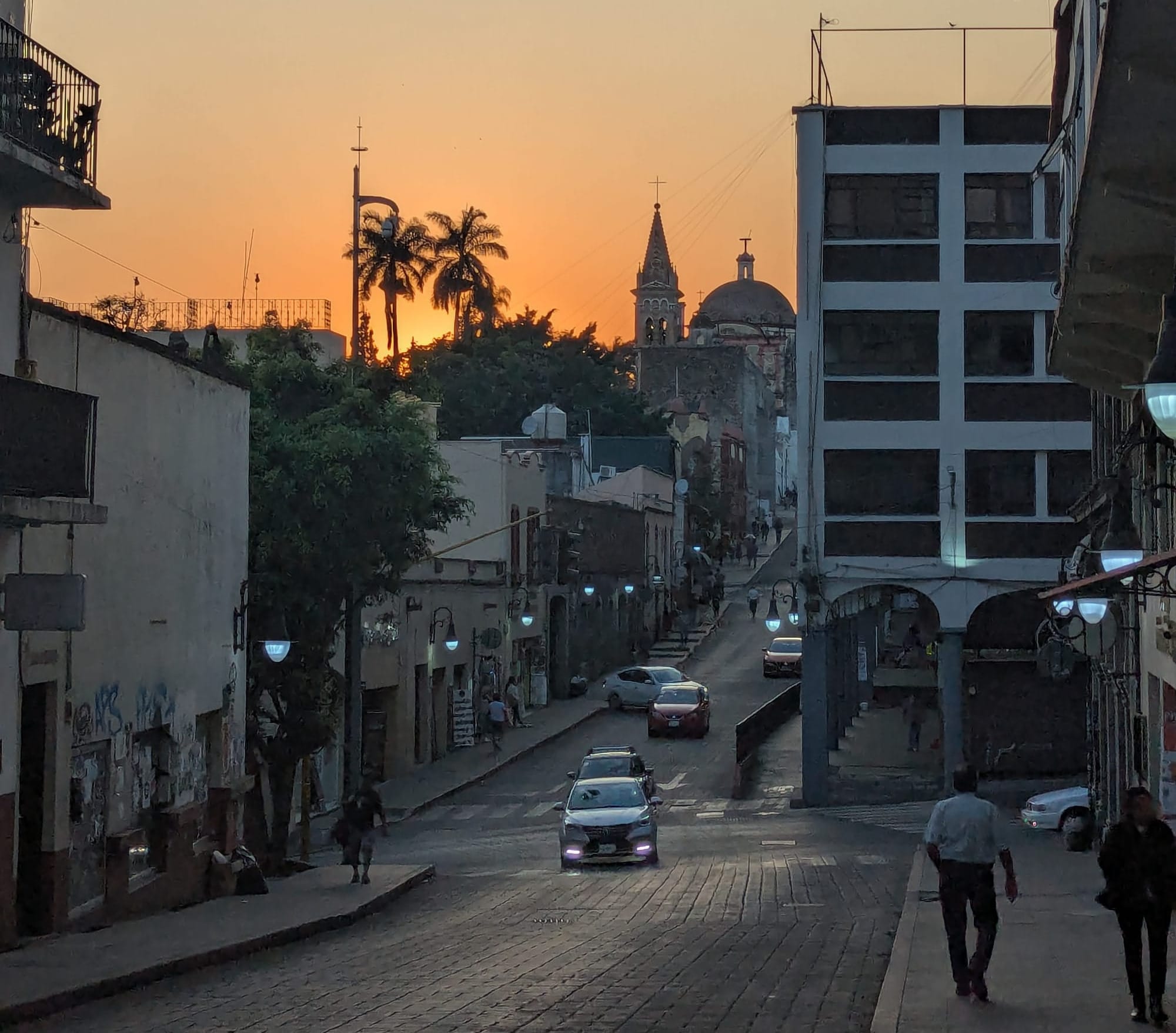
finalidad (dispatch the last)
I don’t know why I wanted to live in Mexico for six months. At some point I decided I didn't want to leave.
Fifteen years ago, during my first week of Spanish lessons in Cuernavaca, Maestra Augustina was instructing my classmate Audrey and me on the use of por and para. Prepositions are the devil when learning any language that has them; the fraternal twins por and para especially so in Spanish.
“ ‘Para’ se usa para expresar finalidad,” said Augustina, before launching into an explanation involving going to the mercado por something something para give a gift to your homestay nephew for Three Kings Day. “Wait, what?” we contested, taking turns. Augustina led us through an increasingly confusing series of examples during which I tried to figure out how one would know which in a linked series of events was supposed to be the last. I don’t remember how we found our way out of the woods that morning. Probably in the timeless way of students we said “OK yes I understand” while having absolutely no concept of how anything was supposed to work.
(We were more adamant when Augustina tried to explain the concept of one week being eight days. “Wait, what?” we said again. “Lunes, martes, miércoles, jueves, viernes, sábado, domingo, lunes,” she explained. “You are counting lunes twice” had no effect on her, nor should it have, because one week had been ocho días since time immemorial, so that in 2011 it was just the water. There was nothing to do but throw up our hands and say, look, if you guys want to be wrong, that’s your prerogative.)
I went home and forgot everything I had learned. A few years later I returned to Cuernavaca to relearn Spanish. The bus from Mexico City over the Sierra de Chichinauhtzin was showing a movie about Muhammad Ali - I can’t tell you which one; I was watching involuntarily while trying to look at fields and forests on top of the ridge, and the wide valley we were descending toward. All I can remember is seeing the word finalidad in the subtitles and hearing the word “purpose.”
I don’t know what I was thinking a year ago when I decided I wanted to live in Mexico for six months. All I can remember is I had been jettisoned out of one job, and had walked into another that was supposed to have lasted two months and ended up being at twelve and counting, and that I wanted out: I wanted out of New York, out of a United States determined to eat itself alive, out of a routine that involved too many hours sitting in the same room I’d been sitting in for a decade. I was writing a series of blog posts that wanted to become a book, and I wasn’t devoting enough attention to that. You might understand “attention” as hours at the computer, the way I had interpreted finalidad to mean “finality.” I actually mean the share of my thoughts as I rode the R train and cooked dinner and did anything else during waking hours.
I had pictured myself sitting in Condesa under the trees of the Parque España with my morning coffee; then going back to a cute apartment on a shady block and writing my book. A friend said to me, you have friends in Cuernavaca, you have a network there. You might spend six months in Mexico City and not meet anyone. Go where you can plug yourself in right away.
One of the more important skills in life, one that I somehow have learned, whether or not I apply it consistently, is to listen to other people when they are right.
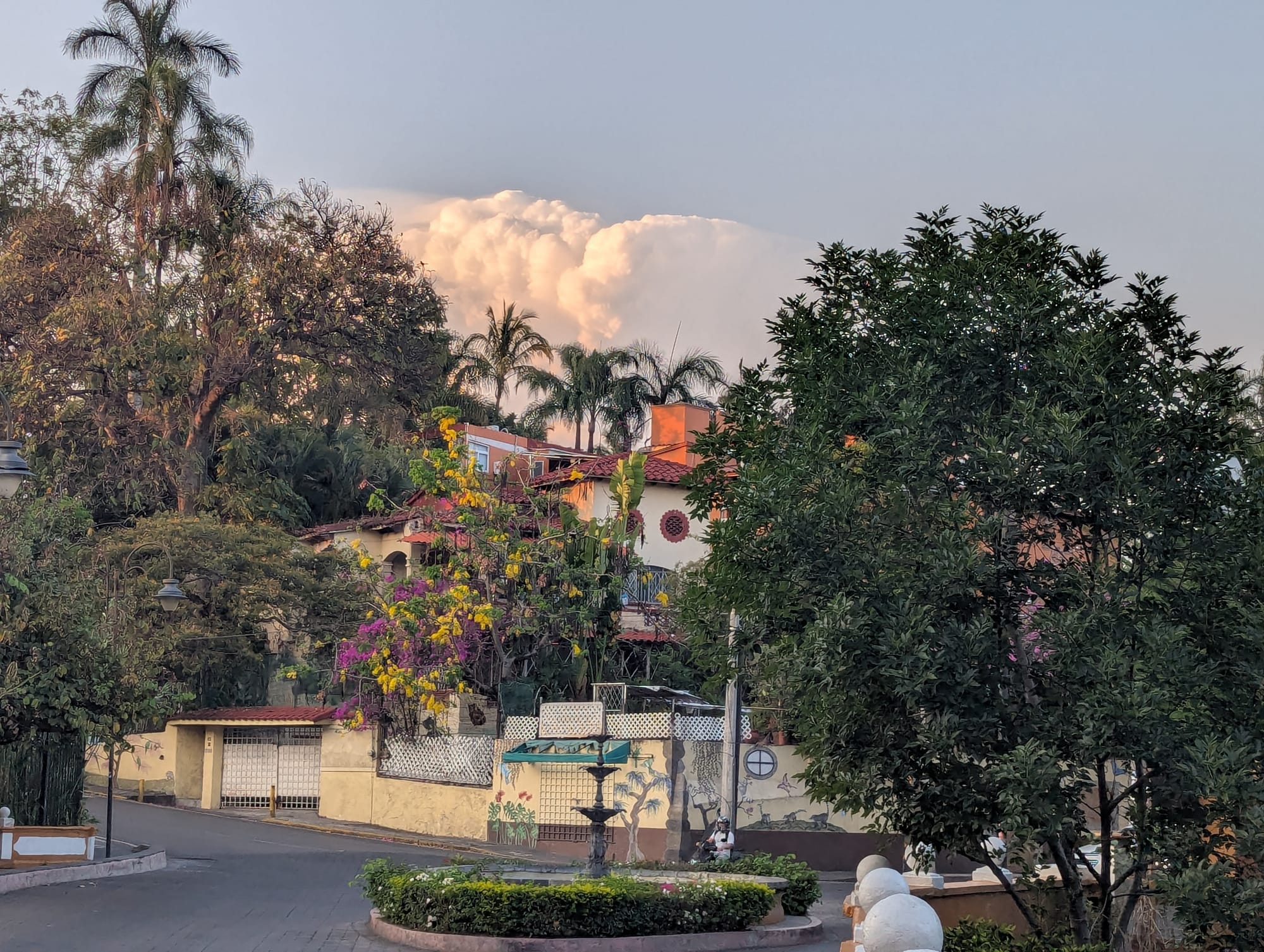
In any case, I had intentions - propósitos is probably better than finalidades. I was going to finish a draft of the book, and of the play I've been writing. And maybe pick up that novel again. I was going to finish reading that 800-page history of Mexico. I was going to learn Spanish for real this time. I was going to volunteer at the language school, to have some community there if nothing else, and at another school called Caminando Unidos, where older children teach their younger counterparts how to read, and maybe I would find a theater somewhere that needed someone to help hang lights and organize props.
Some of them have worked out. I’ve made progress on my book; not as much as I had hoped, because it turns out writing a book is hard. I’ve written other things. More than that, surprisingly, I feel as if I’ve learned how to write while I’ve been here. Or maybe it’s better to say, I think I’ve learned how to write like me while I’ve been here. I’m not sure how or why that happened, except to say that devoting attention to writing seems to make a difference.
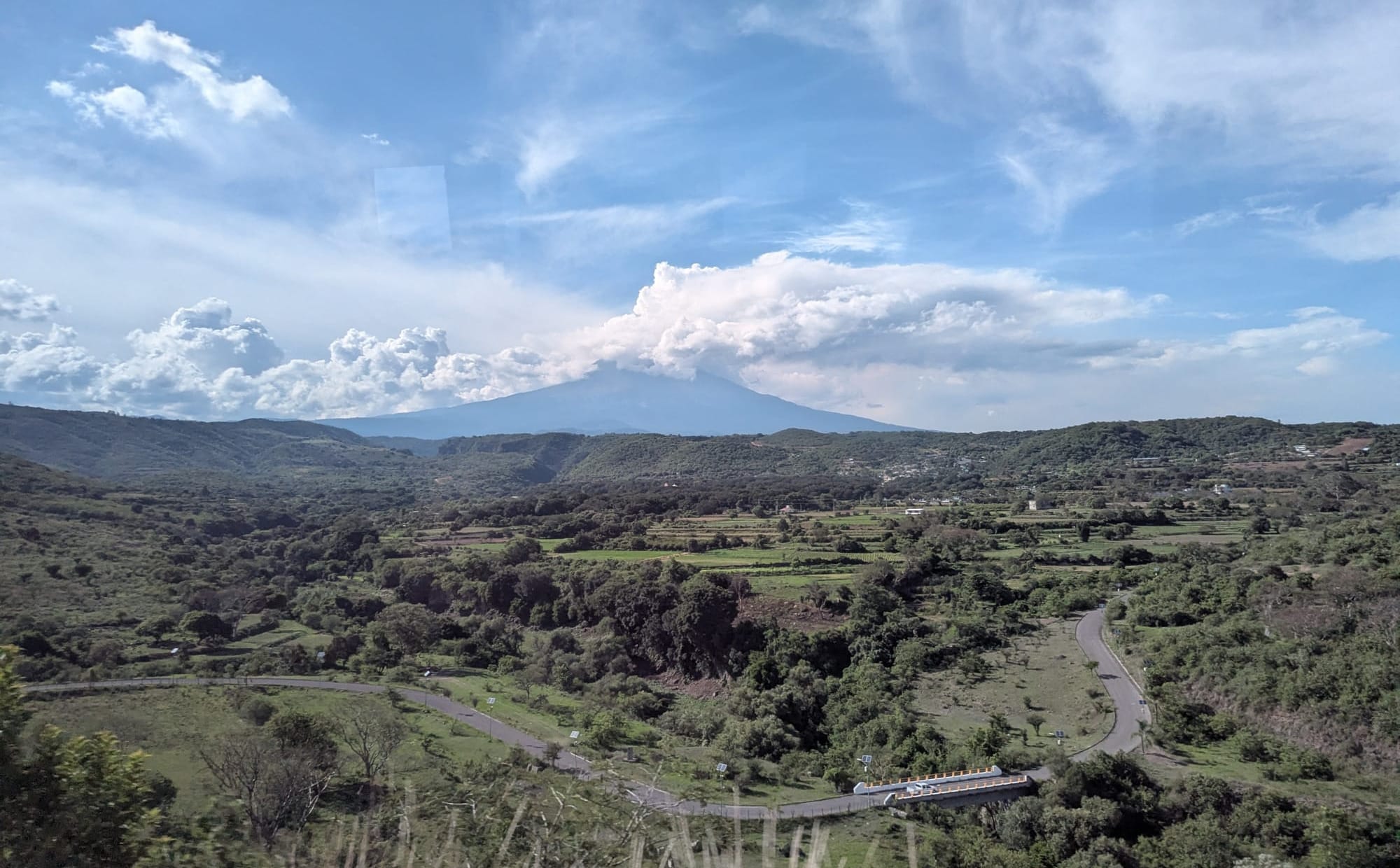
People ask me, “How is your writing going?” and on the one hand I will say that I have not spent as much time sitting at a computer banging out words as I had thought I might. It is one way of writing to go to an office, sit at a desk, and put words on paper or on a screen for eight hours a day. I’m not sure I’ll ever learn that kind of stamina. On the other hand, I would say that since I’ve been here I have been writing almost every minute: taking clothes to the lavandería where a delightful young woman warned me about the alacrán she found in my laundry bag; visiting for the tenth time the Morelos Museum of Popular Art, haggling in a bazar over the price of another book I am just going to have to lug home, riding a bus to Puebla and marveling at the sight of a 17,000-foot volcano.
I’ve reached Álvaro Obregón in the history of Mexico. The language school is working out what its programs will be going forward, in the age of Duolingo; they have had no need of an eager 60-year-old intern. It took me three months to find a theater, which turned out to be in the woods beyond reliable public transportation or even taxis. My sole contribution to Caminando Unidos will be a donation of some household items for them to give to their families or sell.
There is more to do in life than you have time for. There is more that you will want to do in six months in a new place than you have time for. Six months, I have found, is not as much time as you may think.
I don’t know when or why I decided to come to Mexico for six months. I don’t know when or why I decided I might never leave. I’m pretty certain I had not imagined that this “sabbatical,” as I sometimes call it, would reach its conclusion with me talking to people about neighborhoods I might live in and houses I might buy. I don’t think I understood the power of the spell that was cast fifteen years ago.
I said “never,” and it’s not never never - I’m heading back to New York City tonight. And unlike six months, never is a long time. But early on, after just a few weeks, Martha at the language school turned to me and said, “Chris, you don’t really want to go back, do you?” She had observed something. I thought a moment about life in New York, about life here. I said, “No, I really don’t.”
Maybe the turn happened when I showed up at the public hospital to ask them for a prescription. I have written enough about that already, particularly how everyone involved understood that they had a responsibility to take care of this person, this stranger, and I use that word advisedly, who had shown up at their door, both because it was their job as medical professionals and because it was their job as humans. It was the moment when, as I wrote at the time, I found myself and others
navigating streets and bureaucracies in a place where the social contract says we figure out how to navigate them together, somehow; not always, not all of us, but whenever we can, even the people inside the bureaucracies.
The same thing I encountered waiting for a bus in Mexico City, where a man asked me, “Estas formado?” I figured out he meant, “Are you in line?” Bueno, I replied, sí, but I need to find someplace to buy a transit card. I forgot mine at home.
“No,” he replied with a big smile. “Te voy a prestarlo.”
I’ll lend it to you. As if I would ever see this person again.
Mind you, the bus fare in Mexico City is 5 pesos, about thirty cents. The amount was pretty immaterial. Still, something about that word, prestar. I will also mention that when I dug into my pocket and tried to hand him a five peso coin, he waved it off with another smile.
Since then, I’ve seen it more than once. A kid gets on the bus and finds his card is exhausted, and someone four rows back hands their card forward. We’re in this together, and we help each other out. And we do it with a smile, and with a phrase that cleanses any embarrassment from the exchange.
The link between kindness and joy is palpable here. Both of those things might work their way into a visitor’s subconscious.
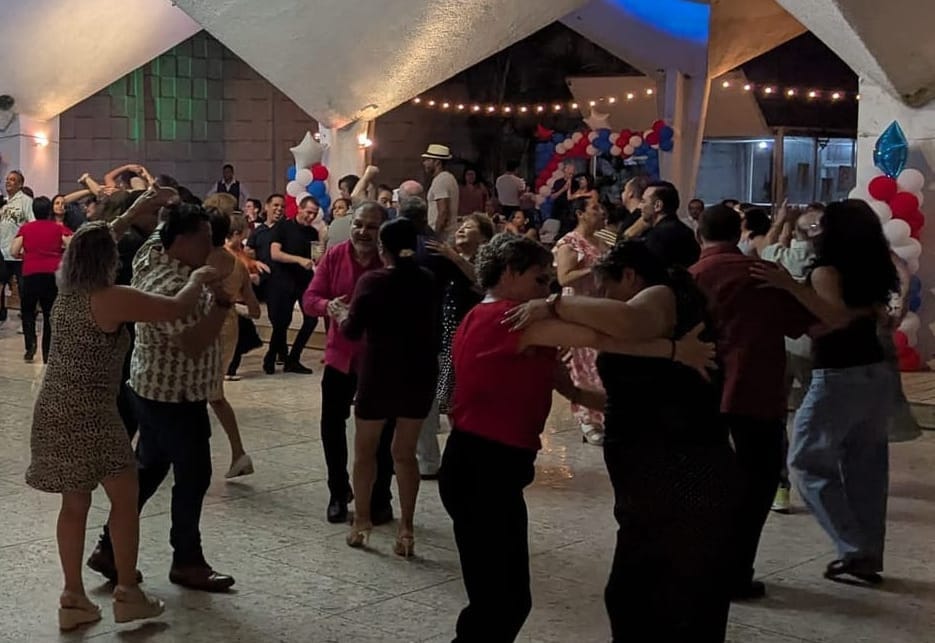
Or the turn might have happened at a dance class. None of my intentions had involved dancing. The joy of immersing oneself in music and motion on a dance floor is palpable here. If you allow it, they will work their way into your body.
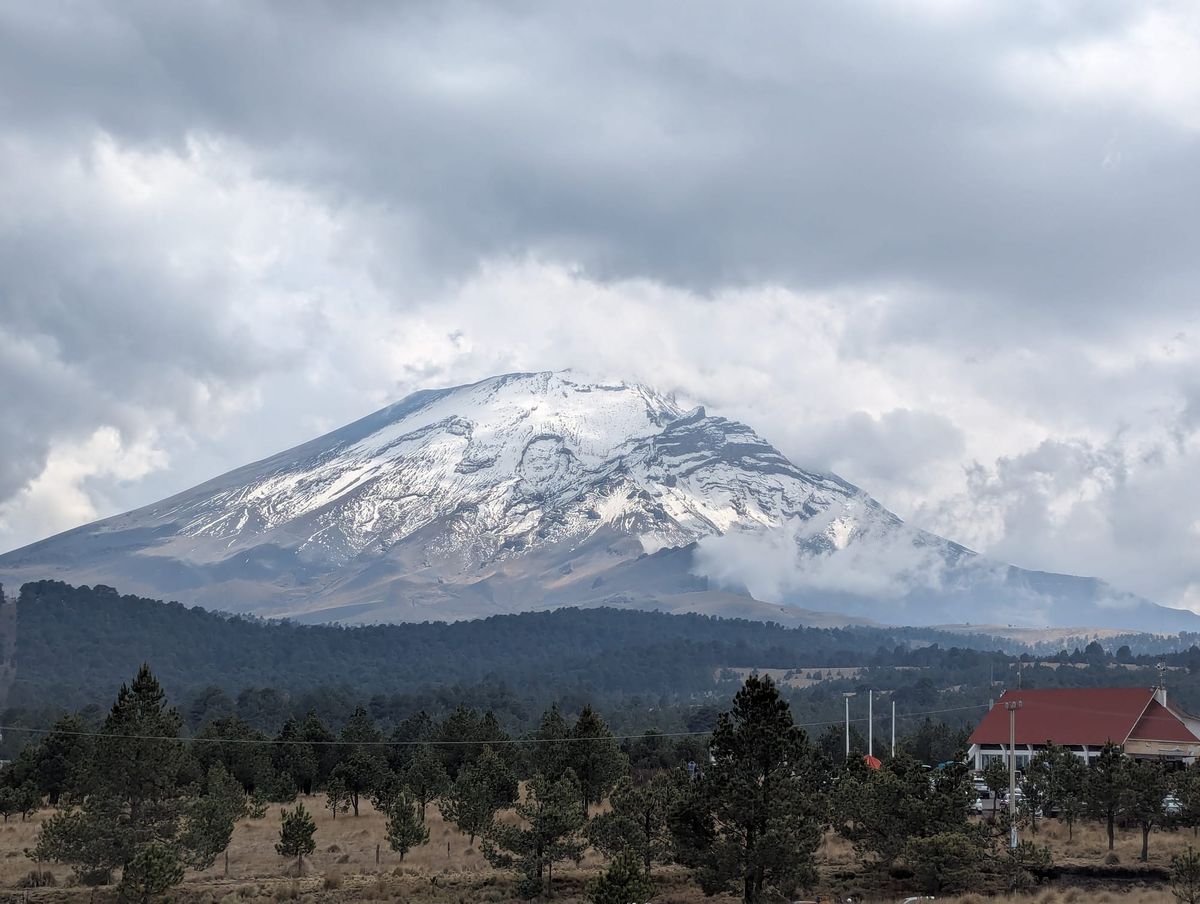
In early April, my once and future Spanish teacher Mario suggested a trip to Popocatépetl, the massive volcano that rises above three states and, on a clear day, Mexico City. I packed for a day of hiking: sandwiches and chocolate and the closest thing I could find to trail mix. We rode across fields where farmers still burn last year’s cornstalks to fertilize the land for the coming season, and through Tepetlixpa, the tiny pueblo where Sor Juana Inés de la Cruz was born. We missed a turn; shortly after that we discovered that the driver we hired hadn’t bother to make sure his car was capable of climbing to 3,600 meters without blowing out the cooling system.
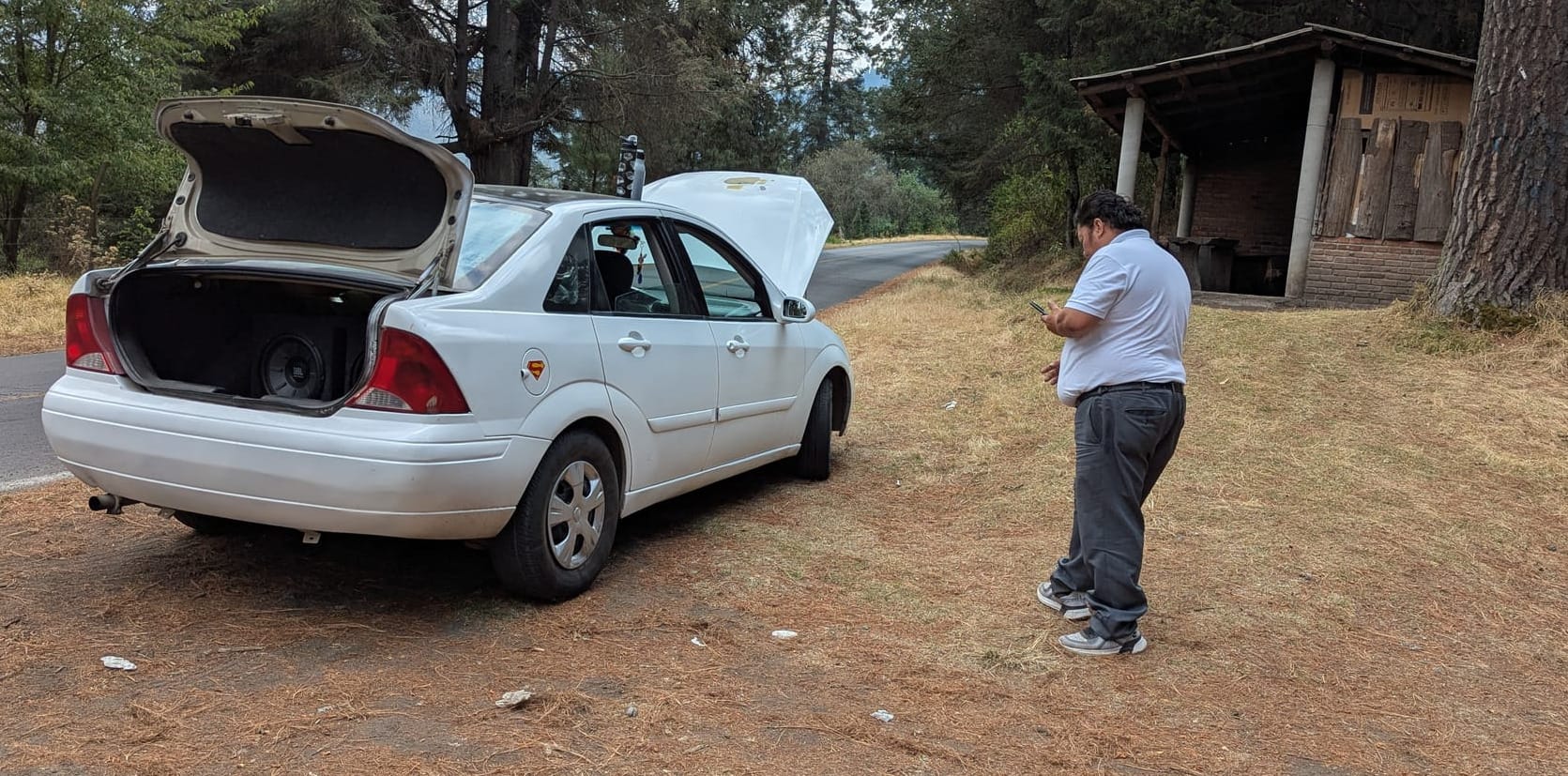
We drove back down to the nearest little pueblo where we hopped on a bus heading up the slope. The bus suddenly turned right, and we realized it was not taking us to the Paso de Cortés, and hopped off, and walked back to the car where steam was still coming from the engine. Mario somehow found a local person with a van and negotiated a trip back up the mountain and a couple hours waiting time at the pass. We hiked for a while, took a bunch of pictures, said buenas tardes to a lot of folks who had been more successful hiking up to Popo’s neighboring, extinct volcano Ixtaccíhuatl. We ate some chocolate.
We got back down to the pueblo, which was so small it didn’t have an ATM. Mario confessed to me that he didn’t have quite enough money to pay the agreed amount to the local driver. A negotiation followed, which seemed like it was a little tense. I went in search of a tienda that would take a credit card. At one point, Mario turned to me and asked, “Chris, do you feel like a Mexican now?”
Somehow it all worked out. Our first driver patched the cooling system with a substance only slightly more adhesive than Wonder Bread, and we drove back through the fields and Nepantla and Cuautla and Tepoztlán and around a fiesta in Ocotepec, where Martha and I would later look at a house, and back across the barranca to home.
Driving out of the ATM-less pueblo, Mario talked to me about the legend that the mountain will reject those it deems not worthy. I am still not sure whether everything that day adds up to being received or turned away. In the end it does not matter. What you discover along the way, trite as this may be, turns out to be more important than the finalidad.