gowanus bay terminal (part 1)
Our impossible, well-meaning plan to put on a show in a concrete plant, and the trouble it led us into.
On the way to figuring out what I learned producing theater for 25 years, I'm taking a look at the various places we put up shows. A couple previous ones are here:
These were intended to be short, but writing about the Gowanus Bay Terminal got the better of me.
First of two parts.
There was a horse. That feels like the most salient fact about our impossible adventure at Gowanus Bay Terminal. The day before we opened, Pink, our artistic director and the director of the show, informed me that our host at our venue, an industrial site in an out-of-the-way corner of Red Hook, had arranged for us to have a horse clopping around for atmosphere. I was still wrangling with vendors and the insuitability of our dressing rooms and how to make an orange Igloo water jug fit in the 19th century world we were creating. Even today can feel my incredulity at learning I needed to add animal husbandry to the punchlist.
I’m fairly certain my response didn’t include any full sentences and ended with “Whatever.”
I had no idea what we were attempting when we staged Enemy of the People. I certainly had no idea what I was doing. I’d produced a whole bunch of shows by then, in a bunch of different venues. Kids’ shows, which were by no means simple to pull off, and one-person shows (likewise), and shows in places that barely deserved to be called theaters (looking at you, Under St. Marks). I thought this was going to be like that.
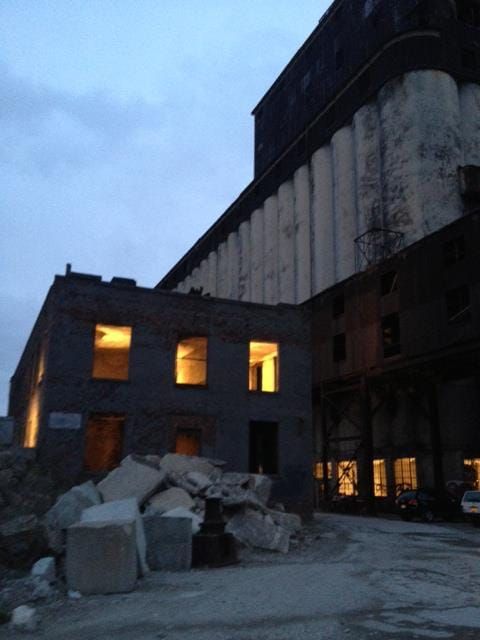
A few weeks before load-in, we had a production meeting in a local bar. Me, Pink, our lighting designer Chris, our scenic and costume designer Deb, and our other producer Stephanie, who along with Pink was playing a significant part in the play itself. Part of our production meeting involved touring the Gowanus Bay Terminal, which was where we planned to do the production. The base of operations for a concrete company, the terminal encompassed a number of disused buildings, including an enormous grain silo, empty since the 1960s.
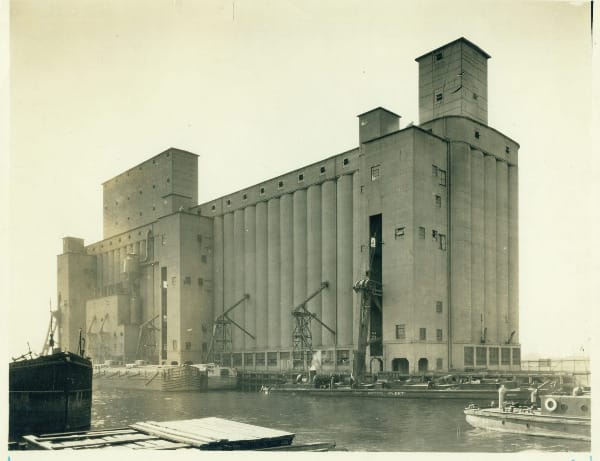
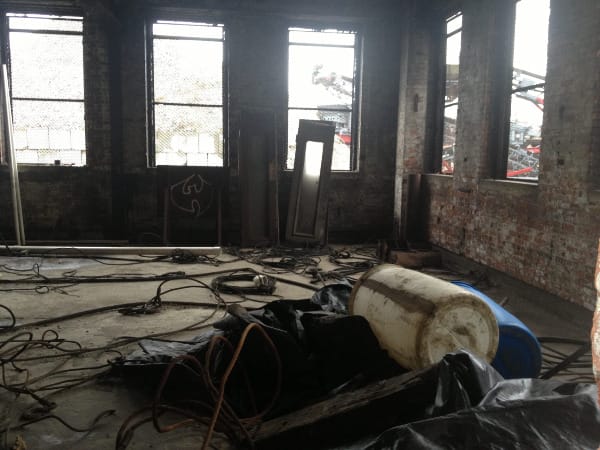
We looked at the building that was to be our stage, a former electrical plant for the grain elevator. At the time of our tour, our proposed stage stored an array of derelict machinery and random spools of heavy-gauge cable. Little about it was encouraging.
The magnitude of the project grew on me as we discussed our requirements. We needed power. We needed water. We needed seating. We needed restrooms. Our host, the owner of the concrete business, didn’t want people wandering the more perilous areas of his facility, so we needed buses to bring people a tenth of a mile from the gate to our “theater.” We needed something to use as a dressing room.
None of these things had anything to do with the show we were trying to put on. I was surrounded by artists who saw, in the rawness of the space, only possibility. For my part, all I could see were big and costly logistical challenges.
Really, this is just the nature of producing theater. Usually, though, you can walk into a place like Under Saint Marks, pay them a fee for the rental, and get lights and a stage, filthy though it may be, and seats and a plausible backstage area. In this case, we were going to have to build it all from the ground up.
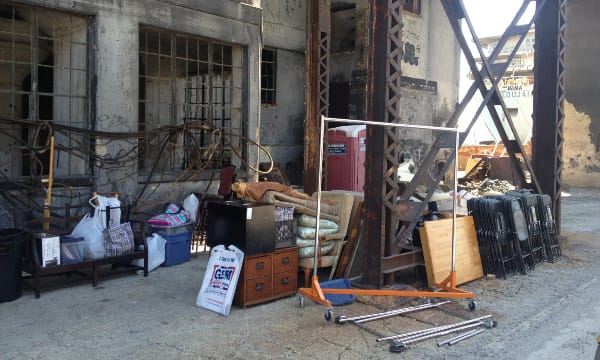
I’m not going to go through all the details of how we solved all that. Our landlord for three weeks, John, moved heaven and earth (and a variety of derelict equipment) to make our show possible. When the lighting company delivered a generator four times the size we were expecting, our lighting designer, Chris, saw the need and offered to expand his role into running the show. Deb, our fearless designer, saw not merely the potential in the space, but the road from potential to realized. Ordering portable toilets turned out to be kind of fun, not least because I got to solicit prices from companies called “A Royal Flush” and “Call A Head.” The bus requirement turned out to enhance things, since the bus company - one of John’s tenants in a side-business - agreed to pick up audience members at various bars in the neighborhood, and everyone arrived in a festive mood.
Somehow we pulled it off. We pulled it off despite new obstacles every day and despite winds off the harbor that brought temperatures to 50 degrees in May, in a building sans heat or for that matter doors and windows, and despite the subsequent battle between Stephanie and and Deb O about whether to rent and install portable heaters for the audience. (Stephanie, being the producer, got her way and it was the right way; we’d have lost half the house at intermission. I’m surprised we didn’t lose actors from hypothermia. Or for that matter an ankle sprain. Deb may have lost the battle of the heaters, but she insisted on putting all the women in short dresses and high heels, and that the dressing room needed to be out of sight, across a gravel lot, back where the buses were parked.)
We filled the house. Everyone who came was floored by what we had pulled off. I was floored by what we had pulled off, this little theater company that never cleared $100k in revenues.
And the horse was awesome, and memorable, particularly during a matinee when it decided to distract an actor who already couldn’t remember her lines, in just about the most distracting way a horse can do.
And.
To know the “And,” you need the backstory of why that play, in that place, at that time.
Red Hook, Brooklyn, abuts the point where the Gowanus Canal meets New York Harbor. The Gowanus was built in the 19th century to enable barges to make deliveries and pick up goods from what was then an industrial area of Brooklyn. It’s a dead-end waterway, which means that for two hundred years, no current was flushing out various chemicals being dumped into the water or seeping into it through the marshy land of its banks. Chief among these were by-products from “coal oil,” which you know as kerosene (1), and which the Brooklyn Union Gas Company used to light homes. The canal’s history is horrifying; as early as 1889, the New York Legislature appointed a commission to study ways to reduce pollution in the canal.
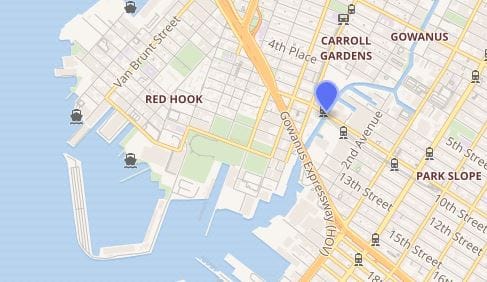
By 2010, after nearly 50 years of efforts by neighborhood groups, the Environmental Protection Agency declared the Gowanus a Superfund site. This meant money for cleanup; it also meant that where there had been general agreement that cleaning up that canal was a salutary idea, the nearby communities now engaged in debate over specific actions the government intended to take. “Something should be done” is easy; “We’re going to do this” tends to be a bit more contentious.
And by 2010, Red Hook was a small town within the confines of New York City - a small town divided among some generational inhabitants, from the days when there were thirty bars on Van Brunt Street and the Irish dockworkers would rumble with the Italian dockworkers; and on the other hand some new arrivals charmed by the neighborhood’s seaside village feel, while also trying to remake it according to their own desires; and on the third, largest hand, the residents of public housing, many of them generational inhabitants as well. Different needs, different attitudes, especially different access to power. Sometimes aligning, sometimes at odds.
Any number of development projects have exploited this quality of Red Hook. A notable one, just as Red Hook was beginning its transition from crack capital to hipster haven, was the proposal to build a massive IKEA store on the site of what had for about 150 years been a graving dock. Over here, folks trying to preserve their quiet seaside village; over there, families seeking jobs. (You can visit the IKEA store today if you like.)
The Superfund process involves a long series of public meetings, before and after the declaration of a site as eligible for Superfund treatment. A lot of the work to get the Gowanus so designated had been done by the Carroll Gardens Association, a community group in the neighborhood next door which was both less divided and more old-school. (2) And which, to be sure, was more directly adjacent to the worst of the Gowanus’s toxicity, and would feel the greater impact of its cleanup, for good and ill. (3) Nevertheless, the Red Hook crowd started buttonholing politicians, hackles raised, demanding a seat at the table. Maybe not unreasonably, although perhaps driven as much by Red Hook’s history of feeling slighted as by any actual stake in the matter.
There was at least one key stake, however. All the gunk from the bottom of the Gowanus Canal, with its 200 years’ worth of ick from coal and gas plants, had to be brought somewhere, and the convenient place was Red Hook, at the canal’s mouth. From there, a “dewatering process” had to take place, to make the gunk more manageable, and some kind of transfer from barges to ships would happen, or maybe to trucks, or - something. Toxic waste sitting under muck and twelve feet of water is one thing; the same waste sitting out in the open air is considerably more frightening.
Did I mention that in 2012 Hurricane Sandy had hammered Red Hook and other waterfront communities in New York City? The water from New York Harbor that showed up in people’s living rooms - in our living room - was filthy enough. Now Red Hook residents were imagining that same water coating their furniture with thousands of cubic yards of polluted goo. (Carroll Gardens had mostly been spared the experience of Sandy. I remember walking, a week after the storm, from Red Hook to Carroll Gardens. Nearly all of Red Hook was still without power; we were spending our days hunting generators and went to bed shortly after the sun went down. I was surprised to discover people a few blocks away were eating brunch as if life was normal.)
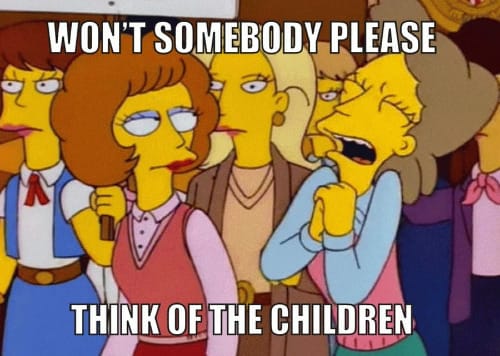
So whereas the meetings in Carroll Gardens were contentious but focused on logistics, Red Hook showed up to meet with the representatives from the EPA carrying existential angst on its shoulders. The community liaison would calmly describe the timeline, and the self-appointed leaders of the community would, somewhat less calmly, respond with four-minute questions to which there was no palatable answer not involving magical thinking. The chief engineer would patiently and passionately explain the critical nature of the project, how he was watching people fish for food in waters unfit for dipping your toes into, and be met with ten minutes of screaming about the EPA’s failure to consider the risks facing children playing on the schoolyard at PS 15. (4)
In the midst of this, a knucklehead named George Fiala was publishing a sort of a newspaper, a “shopper” in the industry lingo, that jumbled together some actual reporting with an events calendar and, mostly, George’s idiosyncratic and poorly-formed views on local politics, inconsistently consistent with the interests of homeowners in Red Hook - a bloc cutting across those from the dockworker days and the bougie arrivistes with their shops selling $400 handbags. Fiala’s so-called newspaper occasionally got things right, but without nuance or doubt, which meant that when he got things wrong, he didn’t go about it half-assed. (5)
One more thing. John, our host at the industrial site with the grain elevator, had come up with a plan. As long as I have known him, John has loved coming up with plans. Some of them are fanciful, easily dismissed as ridiculous the minute they come out of his mouth. Some of them bear fruit. Sometime before we met he had bought a ship, the Loujaine, which he used as a storage silo for the cement he used in his concrete business. It was quite practical, probably cheaper than building a storage facility and not requiring construction and permits and taking up a chunk of his above-ground property that could be used for other purposes. But in addition, I’m pretty sure John just thinks boats are cool. Another of his plans, never realized, was to bring the S.S. United States to Brooklyn and do ... something with it.
John’s daughter loved horses, and thanks to her love of horses he ended up buying a stable opposite Brooklyn’s Prospect Park (and offering us a horse for our play). He invited architecture students to come to his site and draw up plans for how they would reuse the enormous, redundant, un-removable (6) grain elevator, and delighted in their ideas to build a skateboard park, a hotel, an art gallery, whatever.
Apart from that, but also related, John was enamored of artists. He had a fertile and creative mind, and he found fellow travelers in other people with fertile and creative minds. As a businessman he wielded a sharp pencil, but his face would light up when he talked about aerial dancers bungee-jumping from the elevator, about the time Beyonce did a fashion shoot on a pile of rubble, about other projects that he clearly thought were nutty, but whose creativity and fearlessness he admired. It’s doubtless why he allowed a dinky theater company to take over his site for three weeks, and spent a fair amount of money and some personal capital with his clients to support it. In a different life, John would have been an artist himself, but he wasn’t quite built that way. As a producer of theater, rather than a director or actor, I get that.
John’s latest creative plan was this: The EPA was going to be extracting tons of sludge from the bottom of the Gowanus Canal, processing it with other materials, probably concrete, to dilute its toxicity and solidify it. They were then going to have to put it somewhere. John’s idea was to offer his site for the “de-watering” process, and then, once the sludge was diluted and in the form of concrete blocks, to allow the EPA to store the blocks in the underwater property he held title to, adjacent to his industrial site, where it could sit forever - or for many, many years, anyway. He could then pave over the top of the blocks and have additional usable space for his business instead of waves. And with the additional usable space, he could in turn offer some of his existing land for community uses.
From John’s perspective, this was a win-win-win. I don’t know whether it was a viable concept; I’m sure thousands of problems were lurking under the surface, like - is it too on the nose to say “like coal tar at the bottom of a canal”? The proposal assumed all sorts of things about the durability of the concrete blocks; about what happens to currents and aquatic habitats; about whether thousands of tons of concrete, holding up tons of equipment or whatever John imagined putting there, wouldn’t just keep settling lower day by day while sea levels rose; about everything else. At the very least, the road from John’s latest ideation to reality, from “something” to “this,” was going to be long. If nobody else did, the bureaucrats from the EPA would guarantee that the road would be long.
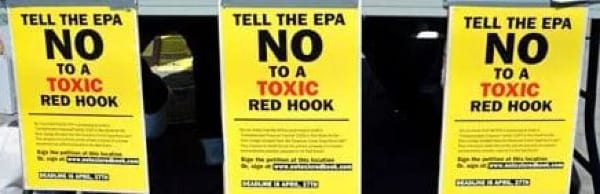
So: Easily divisible community, powder keg of an issue, match-tossing “journalist.” You have obviously seen where this is going. A group calling itself “NO TOXIC RED HOOK” - I think capital letters were part of the branding - emerged to defend Red Hook against a further invasion of polluted seawater knocking at their doors. I say “emerged,” but they maintained a shadowy existence - it was never quite clear, to me at least, who “NO TOXIC RED HOOK” was. As with nearly everything in New York City, it’s a safe assumption the unifying interest was real estate values.(7)
The NO TOXIC folks had the easier message in all of this - it’s not hard to sway people to the position of “we don’t want contaminated sludge near our parks and playgrounds.” No effort to explain to people who had just lived through a thorough inundation was required, although it was certainly undertaken. Anybody trying to suggest that their position was mistaken had an uphill battle. I wouldn’t then, nor today, say they were exactly wrong.
For that, however, the NO TOXIC people brought the fervor of the true believer to conversations around the Gowanus cleanup. One might even say - I would say - a toxic fervor. And, as noted, a fervor that led them to embrace magical thinking, to ignore any and all realities that one might have, that people did, bring to the public’s attention. Such as: the mouth of the canal sat adjacent to Red Hook, and transport of toxic gunk was necessarily going to pass by. Such as, said toxic gunk was going to have to go somewhere while waiting to be processed, and indeed during processing. Such as, after processing, the less-toxic output was going to have to go somewhere. Should the waiting and processing and storage have happened in a low-lying, flood-prone urban area? Arguably not. But NO TOXIC RED HOOK had no interest in “arguably”; they started out on the side of “definitively not,” and only dug in deeper as discussions continued.
The toxicity of their fervor showed up in the manner with which they shouted people down at public meetings. And in their manner of blanketing the entire neighborhood with lurid posters, and removing posters suggesting anything different. I had personal experience with this. Possibly my own nature is to abhor a vacuum; more probably my own nature is to try to approach questions rationally and to despise fearmongering; and definitely I have an impulse to mock those I find deserving of mocking. In response to the NO TOXIC posters
I created a few of my own:
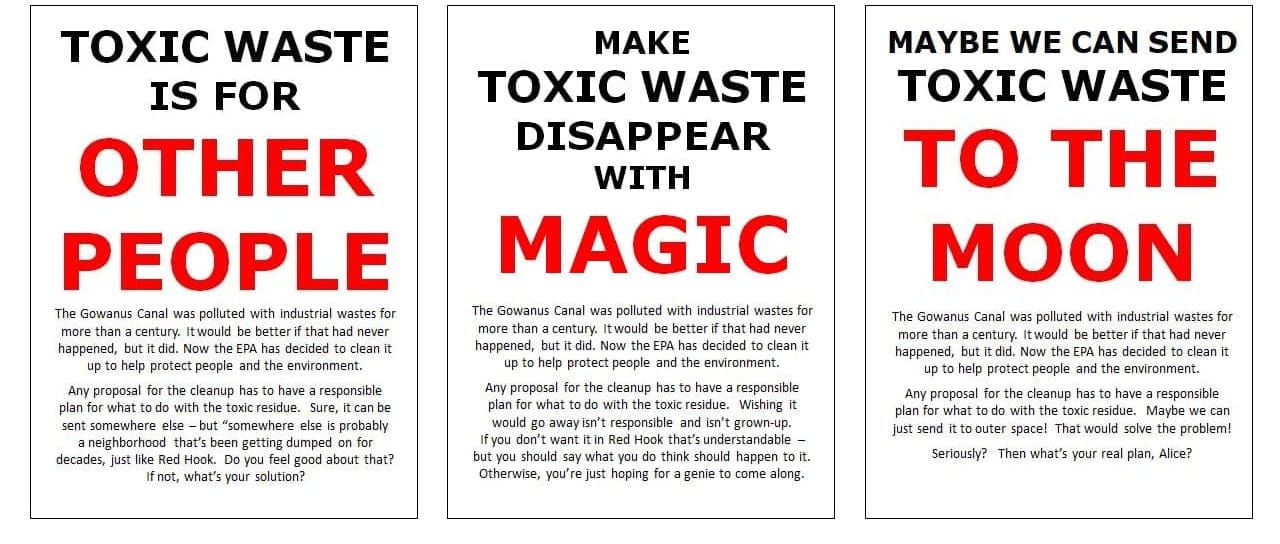
None of mine lasted overnight. (Anyone who knows me, or more especially who knew me then, will be aware that this fact did not deter me; quite the contrary.)
One more thing about the battle lines that were being drawn in Red Hook: John, our prospective host and the author of the concrete storage plan, was unquestionably a polarizing figure in Red Hook. My sense is that this was mostly because he represented the industrial nature of Red Hook, with a dusty concrete business and a parking lot for buses and trucks, that a lot of older and certainly newer residents wanted to see wiped into the harbor. He wasn’t shy about defending his own interests, and those of other industrial businesses in the neighborhood. He could be tough. And the fact that his line of business had an unsavory history in New York - and that his own father, who had his same name, had been sentenced to prison for dealings with the mob - made him easy to malign.
I’m going to say here, and not in a footnote, that never once in twenty years of living and working in Red Hook did I hear anything resembling an allegation that John Jr. was mobbed up in any way. People loved to whisper about his father in an insinuating way. But the only tangible allegations about John Jr. had to do with a pier that collapsed, dropping several tons of sand into the harbor. (9) I obviously don’t know everything. But there were enough people who didn’t like John, and who would have profited from bringing him down, that if there had been dirt on him, it seems likely that it would have come to light.
And - I’ve never talked to John about this; we aren’t that close - it had to be a burden going through life with the same name as a father who had been imprisoned for mob ties. It might make one a little defensive, a little brittle.
So the debate over what to do with the sludge from the Gowanus was consuming Red Hook for a decent period of time. And into this heady situation strode your friendly neighborhood theater company.
Part 2 tomorrow.
(1) Technically, coal oil is produced from coal, whereas modern kerosene is derived from petroleum. If you like you can read about it here.
(2) I want to specifically cite Buddy Scotto here, who is mentioned in the Wikipedia article I linked to. Buddy was the owner of a funeral home that had been in his family, and Carroll Gardens, forever. He led the charge to clean up the Gowanus beginning in the ’60s; he attended all the Superfund community meetings; he held people to account. He was surely well retired by that time. Sometime later, he showed up at the Occupy Red Hook meetings that Falconworks organized. You wouldn't necessarily expect the Xth-generation owner of a business, particularly in an industry as hide-bound as funeral services, to show up at Occupy meetings. Marx would have called him the bourgeoisie, and maybe he was, but as a bourgeois, Buddy was cut from a different bolt of cloth. I don’t know any other way to say it other than that he was for real. I’m sure we would have had our differences. He didn’t let differences divide us. Rest in peace, man.
(3) The good is obvious; the potential ill was that real estate developers were salivating at the prospect of tracts of land, a stone’s throw from some of Brooklyn’s most trendy neighborhoods, being made ready for the construction of high-rise apartments - a change that would, and has, turned Carroll Gardens upside-down.
(4) Most of the time, “what about the children?” was and is a euphemism for “what about our real estate values?”
My father having been a career public servant, I tend to look at government employees - not politicians but the real ones, the ones doing the actual work - with greater sympathy than many. The engineer in charge of the Gowanus cleanup project was a thoughtful, soft-spoken man named Christos Tsiamis. He really did speak with emotion about seeing people fishing for food that was completely unfit to eat, and then he backed that up with the careful planning and logic you would expect from an engineer. Natalie Loney, the Community Involvement Coordinator, shepherded the process forward despite the best, loudest efforts of a cadre of community members. Both Tsiamis and Loney approached their jobs with calm commitment and, as far as I could see, did their jobs well, and they deserved better than to be screamed at in the auditorium of PS 15 by a bunch of yokels with inflated egos.
(5) “Wrong” is a matter of interpretation, of course.
(6) Grain elevators are built to withstand explosions of grain dust, which is highly combustible. John once told us about a different elevator someone was trying to demolish with explosives, which ended up simply falling over on its side, intact. Apart from that, even if you succeeded in demolishing the Red Hook silos, you’d have to deal with the rubble. So the elevator continues to stand.
(7) The linked article mentions a woman named Carly Yates as an organizer of NO TOXIC RED HOOK. Those of us who had been working in Red Hook for any period of time had to scramble to figure out who she was. She did, in fact, own a real estate-adjacent business, and had bought her house in Red Hook in 2011 (the linked article is from April 2013). The quote from her is straight out of the NIMBY playbook, progressing carefully from a defensible “this seems bad” to a whole-cloth “this could be permanent” to, yes, “what about the children?”
“This is almost the worst thing I can imagine for this neighborhood,” said Red Hook mom Carly Yates, a founder of No Toxic Red Hook who is worried about air pollution and fears that the site could become a permanent plant for treating toxic waste. “It’s disturbing — I don’t think that I can raise my daughter here if it were to be built.”
Another individual mentioned as a NO TOXIC leader was a real estate agent named Mark Chin, who had previously been equally absent from regular community events.
(8) People loved to talk about the heinousness of that, too, but last I heard the ocean was full of sand. There was also a fence that he put up, and wasn’t supposed to. He was instructed to take it down, and he did.