what to burn
Survival depends on skill, fitness, experience - and the ability to decide, what you need and what you can live without.
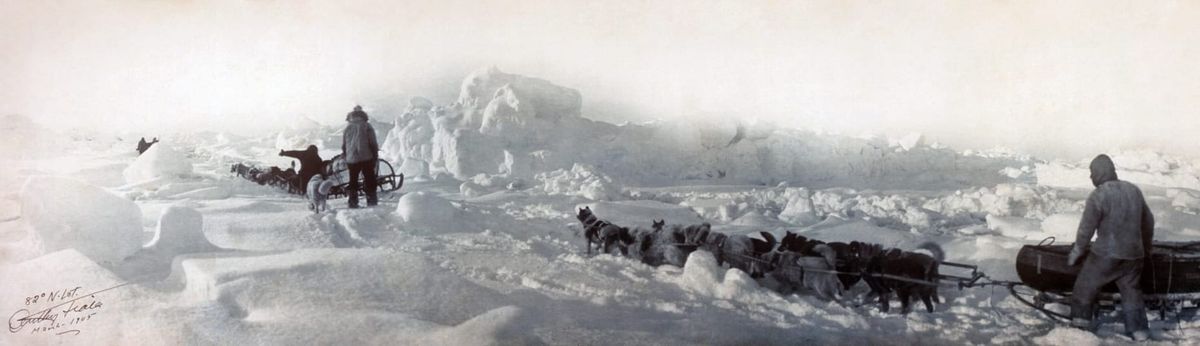
Blair Braverman is a long-distance dog sledder. She finished the Iditarod. When you start learning even a little about competitive dogsledding, you realize that (1) none of it is a joke, and (2) even so, the Iditarod manages to make most other dogsledding events look like a joke.
So Braverman knows what she’s talking about as she narrates survival stories in her podcast What to Carry, What to Burn. The experience of a native Alaskan woman who took a job on an arctic expedition led by dilettantes, because she needed money to recover the son she gave up to an orphanage. Another woman who quit her soul-sucking job working for the IRS to live for a year on an island near Indonesia with a strange man - in all senses of the word “strange,” including some for which using that word is a kindness. A Russian navigator who signed on for a hunting voyage in the sea north of Russia, and found himself drowning in the Arctic Ocean, frozen into his reindeer-fur sleeping bag along with a fellow castaway.
As soon as I started listening I was reminded Annie Dillard’s elliptical essay, “An Expedition to the Pole.” Dillard wrote:
In 1845, Sir John Franklin and 138 officers and men embarked from
England to find the northwest passage across the high Canadian Arctic to
the Pacific Ocean. They sailed in two three-masted barques. Each sailing
vessel carried an auxiliary steam engine and a twelve-day supply of coal for the entire projected two or three years’ voyage. Instead of additional coal, according to L. P. Kirwan, each ship made room for a 1,200-volume library, “a hand-organ, playing fifty tunes,” china place settings for officers and men, cut-glass wine goblets, and sterling silver flatware. The officers’
sterling silver knives, forks, and spoons were particularly interesting. The
silver was of ornate Victorian design, very heavy at the handles and richly
patterned. Engraved on the handles were the individual officers’ initials and family crests. The expedition carried no special clothing for the Arctic, only the uniforms of Her Majesty’s Navy.(3)
Without the credibility of Braverman’s experience her stories would be, frankly, incredible. Braverman talks with authority about the wondrous beauty of sea ice, what it takes to mush gear across miles of frozen tundra, and the effects of scurvy. Scurvy turns out to be a horror affecting almost every person in these stories, so if I should go on an expedition anywhere the first thing I’m packing is a two-year supply of vitamin C tablets. (Also, I have learned things like: On snowfields it’s important to apply sunscreen in places you might not expect, such as the inside of your nostrils and on sled dogs’ testicles. Now you know, too.)
The narratives of the survivors, and some who don’t survive, are compelling, by turns uplifting and terrible. So many things can go wrong when facing the most inhospitable environments on earth, whether the middle of the Pacific Ocean or the polar extremes.(1) The thing is, that’s not really what the podcast is about, the demands on the body. In almost every story, the difference between living and dying isn’t physical fitness or experience in the elements. To be sure, fitness and experience help. Much more, though, survival depends on judgment, on adaptability, on the ability to see clearly and without illusion where you are and what’s ahead of you, and what it’s going to take to get from there to where you want to be. And the ability to decide, when it gets down to it, what you need and what you can live without.
The survivors in these stories, the ones who wrote the journals that became the basis for Braverman’s storytelling - nearly all of them Ishmael, reporting and I only am escaped alone to tell thee - often they aren’t the ones you would have bet on as the ship left the dock. I am reminded of what my literature professor Terry Hummer said about the movie The Poseidon Adventure, my actual favorite
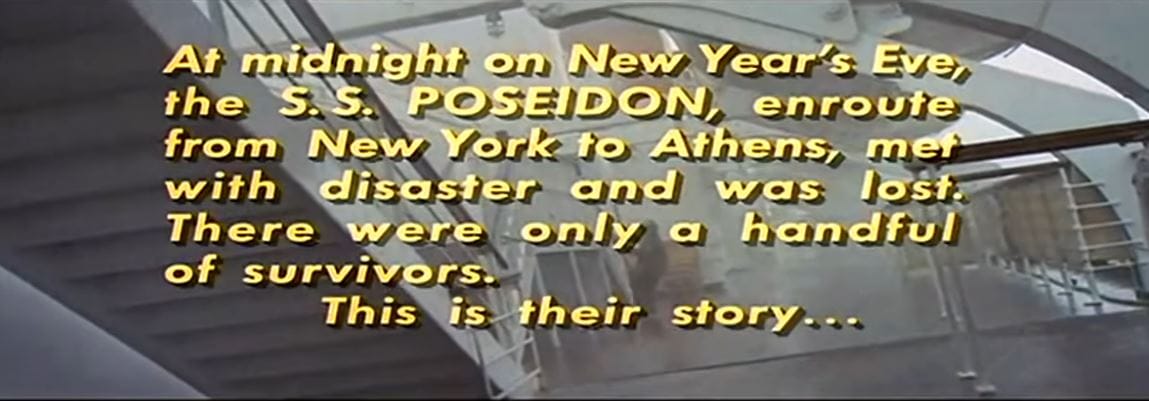
movie.(2) The narrative genius of The Poseidon Adventure, the reason Terry talked about it in our honors lit class, is the way it begins by telling you that, of the passengers who set out on that New Year’s Eve, “there were only a handful of survivors.” We spend the rest of the film playing God, deciding who is worthy of living and who is not, often finding that the actual god of the movie, Irwin Allen, enjoyed confounding the audience’s sense of justice.
You can listen to Braverman’s stories in What to Carry, What to Burn and play at this same game. She plays along, too, a little. As things progress, we see once again that justice may have little to do with one’s fate. But for those who emerge alive, almost inevitably, there is some quality of character that they carry. And some set of cultural expectations and habits that they are willing to burn.
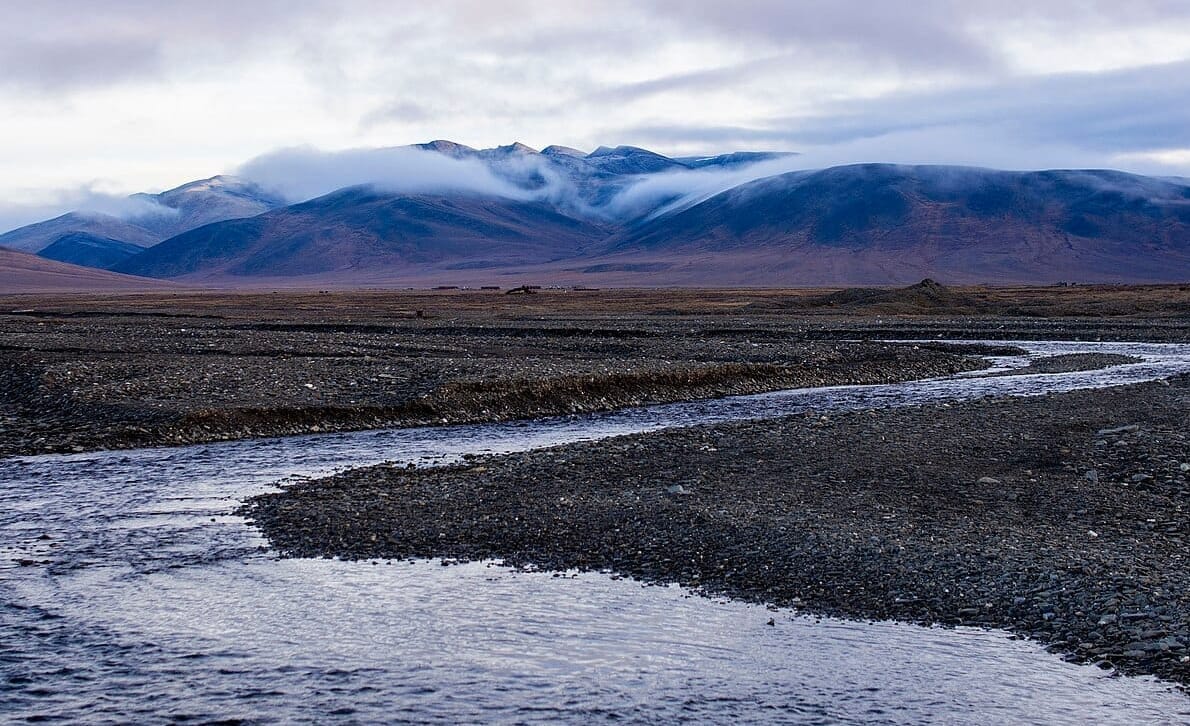
Ada Blackjack, who set off in 1921 to a Russian island north of the arctic circle because she was promised enough money to reunite with her son, finds herself there with four young, starry-eyed fools. They arrive at Wrangel Island with their pile of gear, Braverman says, and “the ship ... leaves, goes off into the distance, and now it’s just them on the beach.”
(That moment recalls for me a family vacation in Canada, when we took a train to the wilds north of Sault Sainte Marie. The conductor dropped us at a tiny shelter just large enough to hold a clipboard where we wrote down our names and itinerary. We stood there in the rain, surrounded by canoes and tents and sleeping bags, as the train continued north toward a distant place with electric light and warm beds.)
The fools Ada finds herself among, whose participation in the venture started as something of a lark, have done things like bringing 26 boxes of candy because they cannot imagine living without candy for two years. They did not purchase the skin boats they needed. They had allowed themselves to be misled by the expedition’s organizer, who had minimized the challenges of the adventure. (He did not accompany them, by the way.) “The polar regions are just as commonplace as Ohio,” he told their parents.
This turns out to be somewhat untrue, but apparently it is a thing people tell others, and perhaps themselves. Braverman reads a letter she herself wrote after moving to the Norwegian arctic:
Dear Mom, I don’t think of this place as being dangerous at all. Imagine if I had grown up here and moved to an American city. Then I would probably call home and talk about how there are car crashes that people die in ...
I am listening to these tales of what to carry and what to burn while evaluating the contents of my Brooklyn apartment in advance of a move. Even given the cost of square footage in New York, I have amassed an impressive collection of things, needful and less so. A stack of hoodies. Candlesticks. Framed art, some of it displayed. Books - good lord, books. Two dozen plates, chipped and otherwise. Newspapers from the day Joe Biden won, from the day George Bush sent tanks into Los Angeles, from the day after the gay and lesbian march on Washington in 1993. Letters from old boyfriends, written in the days when boyfriends sent letters. A cobalt blue stein, currently holding binder clips, bearing a little pewter plaque celebrating the Citibank Private Bank’s achievement of $100 billion in assets under management.(4) A minimal amount of sterling silver, although the pieces I have lack a family crest.
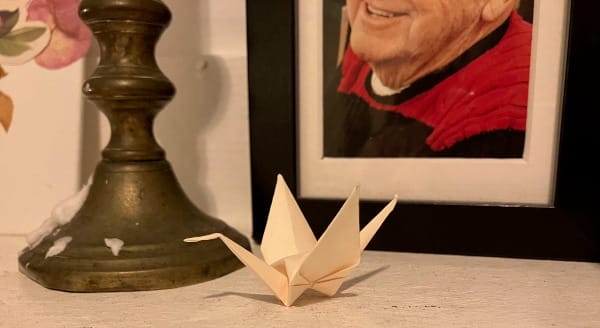
Many of these things rest on distant upper shelves, or in shoeboxes at the back of the closet, or on my desk where they occupy space that surely has more profitable uses. On one hand, I need none of them. I have an entire banker’s box of notebooks. What good are notebooks? They won’t help me survive. On the other hand, burning all my notebooks would force me to consider that my life is no less ephemeral than a paper crane from my niece’s wedding. Holding on to them, instead of dispatching them with the recycling, affords me a small measure of comfort. Or perhaps an illusion of comfort.
It is easy enough, moving across town or even across a few states, to find a corner in the moving van where you can shove a box labeled “theater memorabilia” or “assorted miscellany” or, borrowing a phrase from my friend Marie-Claire, “Museum of Me.” It is a somewhat different matter to move these items - let’s quit equivocating; this junk - across the Rio Bravo and over the Sierra Madre to a spot south of Mexico City. The latter forces one to make some uncomfortable decisions.
Annie Dillard writes:
If you are [Robert Edwin] Peary and have planned your every move down to the last jot and tittle, you can perhaps get away with carrying a Deke flag to the North Pole, if it will make you feel good. After eighteen years’ preparation, why not feel a little good? If you are an officer with the Franklin expedition and do not know what you are doing or where you are, but think you cannot eat food except from sterling silver tableware, you cannot get away with it. Wherever we go, there seems to be only one business at hand—that of finding workable compromises between the sublimity of our ideas and the absurdity of the fact of us.
Unlike the members of the Franklin expedition, Ada Blackjack is remarkably capable. She brings with her the kinds of skills that women learned, and learn, sewing and cooking and managing a household, albeit an igloo household of four naïve men and herself. The men are not without skill. They can hunt and trap. Their officially designated leader, a university student named Crawford, is a naturalist who documents every plant and animal he encounters; another man named Knight, their leader in practice, went to the island on a previous expedition. His willingness to return ought to have disqualified him, but his experience proves useful - until, you know, the onset of scurvy.
Beyond the capabilities she has brought with her, Ada has the ability to learn. She teaches herself how to trap foxes and how to shoot a gun, even though guns terrify her. And ultimately, having arrived in this remote place as the housekeeper for everyone else, taking their instructions - having almost certainly lived her previous life in Nome taking instructions from men around her - Ada realizes and then decides that if she is going to survive, she is going to have to learn to depend on herself.
Eventually the candy runs out. More critically, the bear meat runs out. The others lose their bearings. Three of them set off with a plan conceived in desperation to cross miles of sea ice and make contact with the world to the south. Ada stays behind with Knight, by now bedridden and useless. She remains his housekeeper and caregiver, learning to hunt polar bears - did I mention that the name “Wrangel Island” comes from the Russian words for “Polar Bear Island”? - and chop wood to keep the fire going, and do anything else it takes.
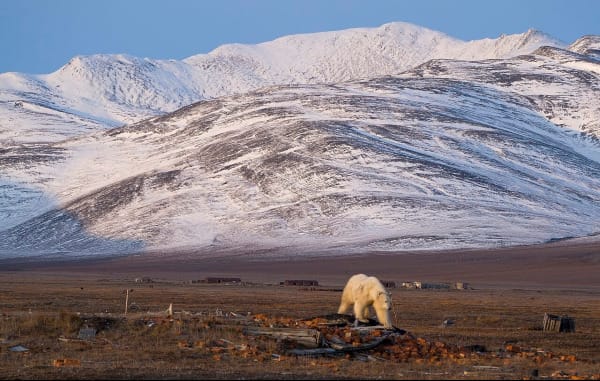
Anything else it takes. That is the key. In every one of these stories that I have listened to so far, there comes a point - maybe as soon as the enormity of the situation becomes apparent, maybe later when matters become truly dire, often more than once - when the survivors decide that whatever limitations placed on them by custom or habit or disgust, or simply fear, must be set aside.
A fisherman named José Salvador Alvarenga sets out into the Pacific, off the coast of Mexico. A young man accompanies him, a teenager named Ezekiel, who - this is a recurring theme - had no real business being out there. A storm catches them; they’d headed out without an anchor; within days they are adrift, with no idea where they are and no way to contact anyone ashore. There’s no food; there’s no water; there are more storms. José keeps the boat upright and fends off sharks and drinks his own urine and the blood of a turtle.
Ezekiel, already convinced he is fated to die at sea, won’t drink the blood. He thinks it’s a sin.
François Raynal, marooned on an island south of New Zealand after a failed search for silver, reaches into an impressive storehouse of knowledge to make cement out of clamshells, to make bars of soap out of ashes and seal fat, to make shoes out of sealskins, and to devise a kind of miniature constitution that prevents his four shipmates from turning on each other. He makes a blacksmith’s tongs in order to fashion a new boat. (This may not strike you as impressive, but Braverman describes it as a miracle, and, candidly: yeah.)
Valerian Albanov, the Russian navigator, leaves his ice-bound ship with a team of men, hoping to reach Franz Josef Land, when it becomes clear their food will not last a second winter. He estimates he and the others must cross seventy miles of sea ice to reach the islands, where they hope they will find - something. Sea ice, Braverman explains, is neither flat nor static; as they push sledges up and down ridges of ice, currents push them farther north than they had started.
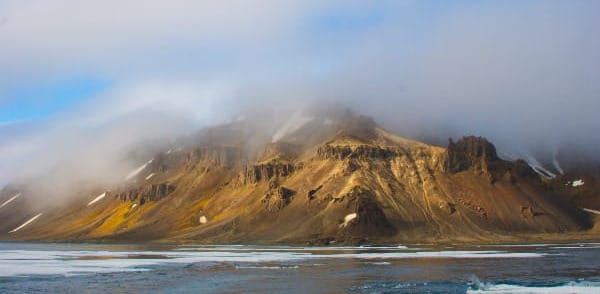
Each of them takes stock of the situation and concludes there is no other choice but to carry on.
There is another thing, though, that comes before “whatever it takes.” Every survivor has something pulling them forward. A north star, if you will.
Ada Blackjack can see the future. The fools accompanying her are young and careless and focused on the now of the thing - 26 boxes of candy and all that. Ada, though, has gone on this voyage with a purpose - reuniting with her son - and keeps her eye on how she will get to the other side and what she will do when she gets there.
José, the Mexican fisherman, loves life, despite having lived a life that an ordinary person might not believe is worth loving. One could give up after ten days at sea, after a month at sea, after half a year. No one would blame you if you gave up. He refuses, and it becomes his mission to save Ezekiel. To try to save him, José tells Ezekiel he needs him to stay alive in case he, José, dies, so he can carry word to José’s daughter. But really, José loves life far too much to give into sun and the sharks.
Albanov’s men keep doing things like falling into the ocean and then burning extremely useful items to dry off. A couple of them wait until Albanov is away scouting a better route, and then take off on their own, along with half the gear and hard tack. He writes in response, “I will certainly not rest until I have managed to save them in spite of themselves.”
To refuse to give in. To have a reason not to give in. Whatever you may burn, that’s the thing you have to carry.
The wonders of the arctic intrigue me: the idea that for part of the year, the sun inscribes a circle around the sky, day after day, and for another number of days it leaves us altogether. The spectacle of the aurora borealis. Braverman will talk about the beauty of the ocean in those latitudes, and I believe her, because when I looked out over the sunlit Atlantic from Cape Town at bottom dead center of the southern hemisphere’s winter, it looked like no ocean I had seen before.
As much as it calls me, I do not have what it takes to survive the arctic. I’m not sure I could tolerate a night that does not end. So I feel ridiculous comparing myself to these people. I am moving to Mexico, not Wrangel Island. In Cuernavaca a Wal-Mart, or in the worst case an OXXO, will be within walking distance of almost anyplace I might choose to live. There will be perils, to be sure: earthquakes, street crime, the far more likely possibility of falling into an unmarked hole in the middle of the sidewalk. But I figured out how to buy tortillas by the peso at the Mercado Carolina, and how to navigate the health care system and the voyage to Foro La Negra, and all the other things you know about if you were following along. I’d prefer life without having to check my shoes for scorpions. I’m under no illusion that they compare to polar bears.
One time I was driving across southern Idaho, on my way to a friend’s wedding in Sun Valley. As you drive west on Interstate 84, you can look to the right and see across the Snake River Plain the peaks of the Sawtooth Mountains, fifty miles or so to the north. I remember looking at them and imagining people a hundred years earlier who looked in that direction and decided it would be a good idea to go exploring up there. From that vantage point, the Sawtooths look as forbidding as any mountains I’ve seen. What kind of fool, I asked myself, would venture in there voluntarily?
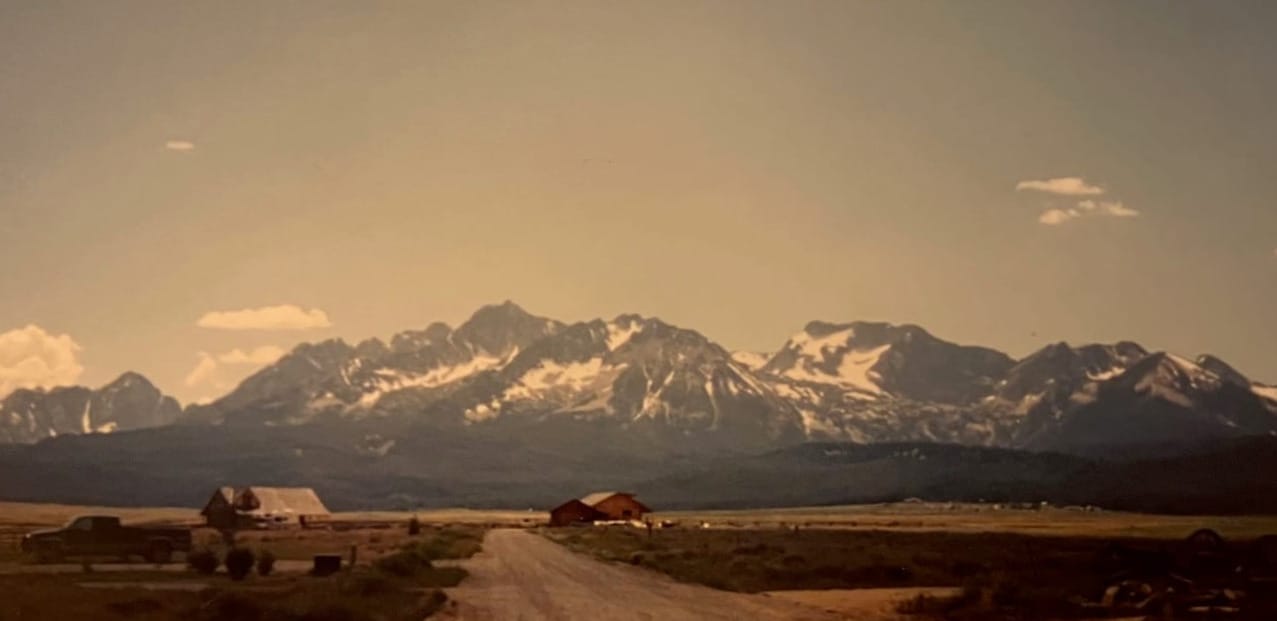
Then again, I grew up in commonplace Ohio.
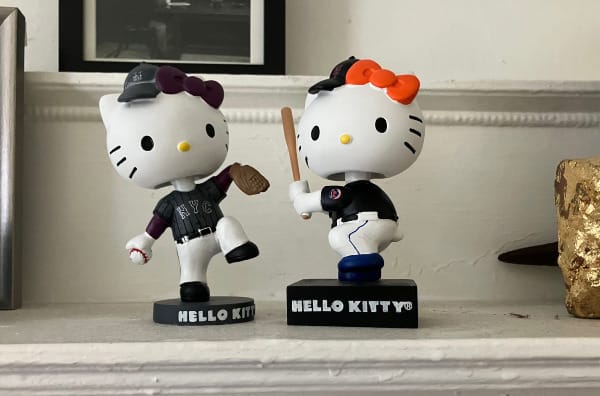
Still: Something there is that pulls me toward Mexico. And the closer that day comes, the more I look around me and think: I am going to have to give things up. Not just physical things, but tendencies, customs, habits. That part has been weighing on me far more than the matter of whether I can find room in my suitcase for two Hello Kitty bobbleheads. Watching me contend with this, watching me struggle to even begin to make decisions, and the way my failure to make those decisions has at times overwhelmed my ability to carry out daily life, someone said to me, “It’s like your apartment is haunted.”
So it is, with the ghosts and memories of thirty years, of a life that was. At some point I am going to have to leave those ghosts behind me, and let them find their peace.
In most cases, Braverman can tell these stories because the individuals in them kept journals. Crawford, the university student in the arctic, documenting the flora and fauna. Knight, too, even as he was dying, and Ada as well - I imagine keeping a journal as another thing she learned during the expedition, watching the others document their days. François Raynal kept a diary after being shipwrecked, and so did the ship’s Captain Musgrave.
It would have been a professional habit for a ship’s captain to keep a log, probably second nature. For some of the others, it is curious, this keeping of journals. Raynal had been pursuing silver and seal fur, yet takes the time to document his and his compatriots’ days waiting for rescue. Valerian Albanov, too, when not herding cats, makes a record of their journey. Some of this is practical, to be sure, the recording of longitudes and latitudes and currents. Not all of it, though; Raynal carefully describes the whiskers of sea lions and the joy of seeing the sun break through clouds.
Why? For whom?
The literary critic Walter Ong pondered this tendency in his essay “The Writer’s Audience Is Always a Fiction”:
The audience of the diarist is ... encased in fictions. ... [T]o what self is he talking? To the self he imagines he is? Or would like to be? Or really thinks he is? Or thinks other people think he is? To himself as he is now? Or as he will probably or ideally be twenty years hence?
Braverman says of Knight, dying of scurvy on Wrangel Island,
Ada’s diary is recording that Knight is getting worse, and we can read between the lines that Knight is getting worse, in his own diary, because of his handwriting and stuff, and because the entries are getting shorter. But, his journal is also - it’s not just a record, it’s a performance.
If you are dying in bed on an island north of the arctic circle, with no reasonable hope of rescue, you are not making journal entries for yourself, it’s fair to say. Braverman surmises that Knight is writing his diary for Vilhjalmur Stefansson, the con man who arranged this fiasco of an expedition. To recriminate him? To show that to the last Knight carried out his duties?
Ada, for her part, teaches herself to type and writes a note on the typewriter about going out with a gun to hunt polar bears. Braverman imagines her thinking, “People are going to come back and they’re going to know that I did all this.” On the other side of the pole, Valerian Albanov describes his fear, under the arctic saltwater struggling to escape his sleeping bag, that if he dies there, no one will know how he died, and everything he did to survive, and and how he tried to save everyone he could.
Even José, the Mexican fisherman, who was not the sort of person to keep a journal - if it even would have been possible on his 23-foot fishing boat - even José concludes that his story matters. His purpose, he decides, is to serve as an example to anyone who thinks they are fully out of hope.
Here am I, writing to you about art that I see, about theater that I helped make, about a trial run in Mexico and podcasts I listen to. Who do I imagine you are, and why do I imagine you care? Why did I feel the need, when making these entries public, to title them notes for nobody but myself? At one time I called this blog “a way of remembering.” For me, or for you to remember me? Or for me to shape the way you remember me?
There is much more to it than this, than my little summaries and interpretations of what pulled people through. The beauty and depth of What to Carry, What to Burn lies in the multitude of its stories, the unique challenges that present themselves to each figure, the way each of them holds some unique combination of wants and strengths that enables them to keep going. By collecting the whole of them, Blair Braverman offers the bones of a theory of how we keep going when the world tells us not to. Like archeologists, we look at those bones and try to imagine the creature they belonged to.
In each episode of the podcast, there will be a survivor - we know that going in, because, again, someone returned like Ishmael to tell their story, to bring their journal back. And in every one of them, like Moby Dick, like Breaking Bad (which is just a retelling of Moby Dick), like The Girl Who Loved Tom Gordon, another survival story - like The Poseidon Adventure - comes a moment when you realize they’re going to survive. Reader, I will not hesitate to tell you that even on my second or third listening, those moments brought tears to my eyes.
The Franklin Expedition, on the other hand, ended the way you might imagine for a group of explorers who failed to bring parkas to the arctic.
For twenty years, search parties recovered skeletons from all over the
frozen sea. Franklin himself—it was learned after twelve years—had died
aboard ship. Franklin dead, the ships frozen into the pack winter after
winter, their supplies exhausted, the remaining officers and men had
decided to walk to help. They outfitted themselves from ships’ stores for the
journey; their bodies were found with those supplies they had chosen to
carry. Accompanying one clump of frozen bodies, for instance, which
incidentally showed evidence of cannibalism, were place settings of sterling
silver flatware engraved with officers’ initials and family crests.
notes for nobody but myself is a reader-supported publication. Please click the button below to subscribe, or to become a paying member.
Notes
(1) I listen to podcasts mostly when I’m driving, so I felt some cognitive dissonance as I became annoyed at having to drive ten minutes to find a charger for the electric car whose sound system enabled me to listen to podcasts while speeding across the wilds of Pennsylvania, where one might have to go three or four exits before the next McDonald’s.
(2) Someday I'll get to writing about it, I swear.
(3) Annie Dillard, “An Expedition to the Pole,” in Teaching a Stone to Talk (2007). Dillard died in September. I’ve noted before that she had as great an influence on my writing as anyone. Many people have quoted her advice from The Writing Life:
One of the things I know about writing is this: Spend it all, shoot it, play it, lose it, all, right away, every time. Do not hoard what seems good for a later place in the book or for another book; give it, give it all, give it now. The impulse to save something good for a better place later is the signal to spend it now. Something more will arise for later, something better. These things fill from behind, from beneath, like well water. Similarly, the impulse to keep to yourself what you have learned is not only shameful, it is destructive. Anything you do not give freely and abundantly becomes lost to you. You open your safe and find ashes.
(4) That stein mostly serves to remind me of the frustrated woman who owned a one-person merchandise company. She had laid out substantial cheddar procuring ten thousand such mugs for the bank. She called me weekly, sometimes more, on the verge of tears and bankruptcy, pleading for payment. I would ask anyone I could find how to get that done. I was green, you know, and still of the impression that it mattered. The responses I got ran the gamut from “not my problem” to “that's how it works here.” Somehow I got it done, and that might be the most important thing I did in twenty years at that place.
(5) Walter J. Ong, S.J., "The Writer's Audience Is Always a Fiction," in PMLA Vol. 90, No. 1 (Jan., 1975), p. 20.
Feature photograph of the Ziegler Polar Expedition from the Library of Congress Prints and Photographs Catalog. Photographs of Wrangel Island (cropped) by Анастасия Игоревна Петухова at https://en.wikipedia.org/wiki/Wrangel_Island, and photograph of Ziegler Island, Franz Josef Land, by Boris Solovyev at https://en.wikipedia.org/wiki/Franz_Josef_Land used under Creative Commons license.